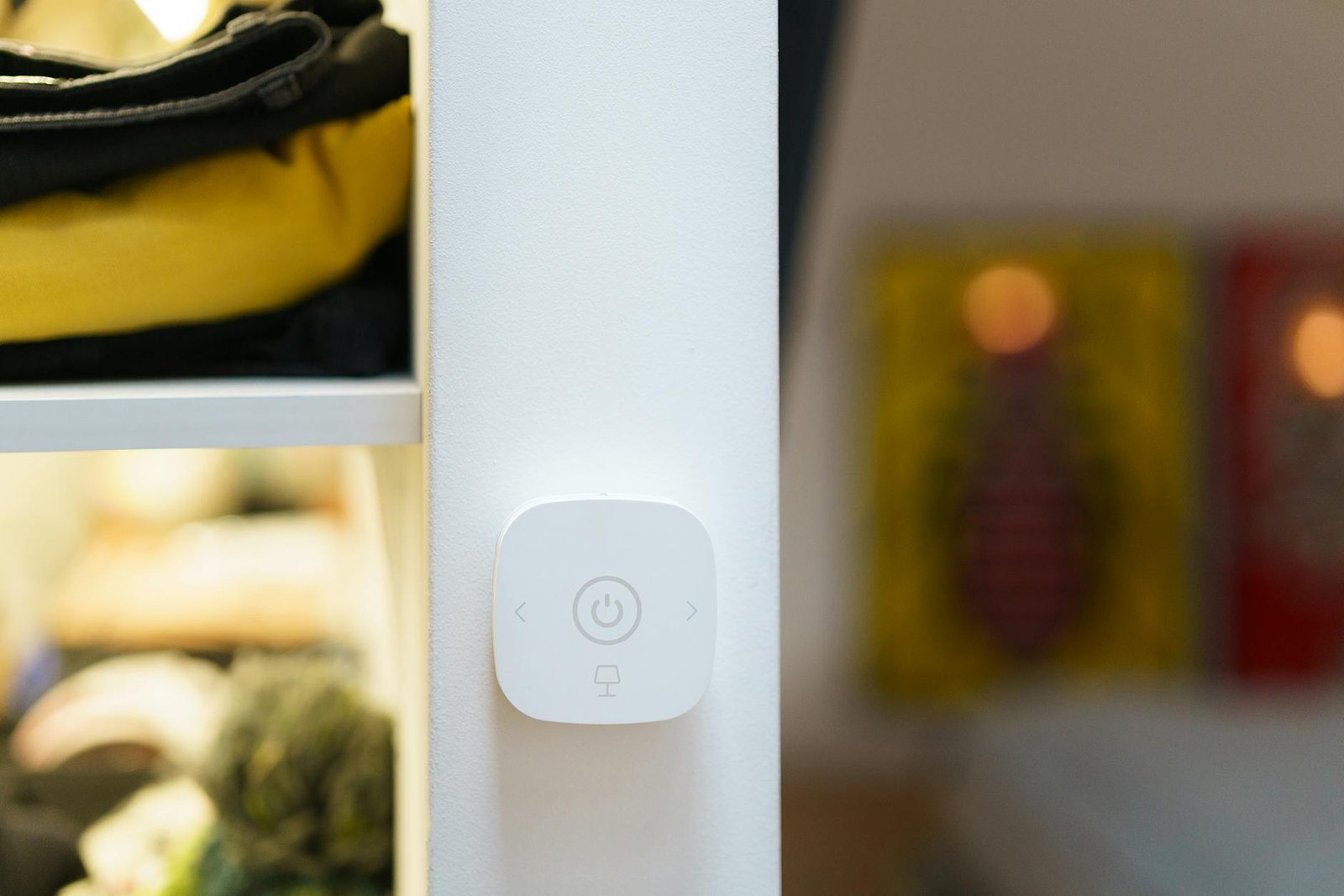
When I was setting up my own home lab a few years back, I made the rookie mistake of filling my walls with cloud-dependent smart switches — and the day one manufacturer killed their app, I lost control of half my house. That frustration is exactly what drove me deep into the world of flashed firmware and local-only control, so when a post showing a “lobotomized” smart switch with a custom cap started circulating on r/homeautomation, I immediately pulled up the gallery and started digging. What surprised me when I first tried this approach myself was just how liberating it feels to yank out the cloud dependency entirely — the switch responds faster, works offline, and you own it completely. In my experience running a home server, this kind of community-driven hardware hack represents the absolute best of what the home lab scene has to offer.
Key Takeaways
- A “lobotomized” smart switch has had its cloud-dependent firmware replaced or hardware-modified to run entirely on local control, eliminating vendor lock-in and privacy risks.
- The trending r/homeautomation post highlights a creative physical cap modification that covers exposed hardware after a firmware flash, showing the community’s ingenuity.
- Local-only smart switches using ESPHome or Tasmota can respond in under 50 milliseconds compared to 300–800ms for cloud-routed commands.
- Five top smart switches are reviewed below for home lab compatibility, local control support, and ease of flashing.
- The best overall pick for most home lab users balances out-of-the-box local control with strong community support and zero cloud requirement.
What Does It Mean to Have a Smart Switch Lobotomized? The Cool Cap Explained
The phrase “smart switch lobotomized cool” might sound like chaos, but in home lab circles it describes something surprisingly elegant: the deliberate removal or neutralization of a smart switch’s cloud-dependent brain, leaving behind a fully local, self-hosted device you control entirely. The core question this raises is simple — can you take a mass-market smart switch, strip out its dependency on remote servers, and end up with something better? Based on community experience, the answer is a resounding yes, and the results can be both more reliable and more private than anything the original manufacturer intended.
The specific post that sparked renewed discussion on r/homeautomation showed a switch that had undergone exactly this process. The owner physically modified the device — opening the housing, reflashing or bypassing the onboard firmware, and then 3D printing or fabricating a custom cap to cover the exposed internals cleanly. The “cool cap” in the title is not just aesthetic pride; it represents a finished, professional-looking result that proves home lab hardware modifications do not have to look like a science experiment gone wrong. In a real home lab setup, this kind of attention to finish quality matters when the device is going back into a wall plate that guests and family members will see every day.
The technical process typically involves using a serial programmer or, in newer approaches, over-the-air exploits to flash open firmware such as ESPHome or Tasmota directly onto the ESP8266 or ESP32 chip that powers most budget smart switches. Once reflashed, the switch communicates exclusively with your local Home Assistant instance or MQTT broker, never phoning home to a third-party server again. The physical cap modification is usually needed when the original housing does not close cleanly after the programmer wires are removed, or when a custom antenna or additional component has been added.
Community Reaction: What r/homeautomation Is Saying
The post landed with strong engagement precisely because it combined two things the home lab community loves: a clean technical hack and satisfying craftsmanship. Commenters on r/homeautomation were quick to ask about the specific switch model, the firmware used, and the material of the cap itself. Several users noted that the finished result looked cleaner than the original factory housing, which is a common outcome when enthusiasts take time to design a proper enclosure rather than relying on the cost-cut plastic of a budget device.
What the community also highlighted was the broader principle at stake. Multiple replies referenced the ongoing trend of manufacturers bricking devices remotely or shutting down cloud services without warning — a problem that has affected users of Wink, Insteon, and several Tuya-based product lines over the past few years. Based on community experience, the frustration with vendor dependency is one of the strongest motivators pushing home lab users toward flashed firmware and local-only setups. The lobotomy metaphor resonates because it captures exactly what is happening: you are removing the part of the device that reports back to someone else.
Several experienced members pointed out that the ESP-based chipset inside many budget switches makes them ideal candidates for this process. The ESP8266 has a clock speed of 80 MHz with an optional turbo to 160 MHz, 1 MB of flash in base configurations, and a Wi-Fi stack that integrates cleanly with ESPHome. The ESP32 successor adds Bluetooth, dual-core processing, and significantly more GPIO pins, making it attractive for more complex switch builds. Both are well-documented, widely supported, and have enormous community libraries.
Why Local Control Matters for Home Lab Users
The practical case for local-only smart switches goes well beyond ideology. Cloud-routed commands introduce latency that users notice — typical round-trip times for a cloud-dependent switch toggle run between 300 and 800 milliseconds, while a locally controlled switch running ESPHome responds in under 50 milliseconds. That difference is the gap between a switch that feels like a normal light switch and one that feels like it is thinking about your request. For anyone who has had a family member complain that the smart home is slower than just using the regular switch, local control is the fix.
Privacy is the second major driver. Cloud-connected switches create a detailed log of when you are home, when you wake up, when you go to bed, and what rooms you use. That data lives on servers you do not control, subject to privacy policies that can change and data breaches that you cannot prevent. What actually works in practice is a fully local setup where your automation data never leaves your network — your Home Assistant instance running on a home server holds all the state, all the history, and all the logic.
Reliability is the third pillar. A local switch works during internet outages, during cloud service disruptions, and after the manufacturer goes out of business. Given that the average home lab enthusiast invests significant time configuring automations, scenes, and integrations, the prospect of that work becoming worthless because a company pivoted is genuinely painful. The lobotomized switch trend is a direct response to that risk. You can also explore setting up Home Assistant for complete local smart home control to build the infrastructure that makes these switches shine.
Top 5 Smart Switches for Local Control and Home Lab Use
1. Sonoff BASICR2 (Flashed with Tasmota)
The Sonoff BASICR2 is one of the most flashed devices in the home lab community, built around an ESP8266 with 1 MB flash and a 10A relay rated for loads up to 2200W at 220V or 1200W at 110V. Its open design and well-documented pinout make it a perennial favorite for Tasmota flashing.
Specs: ESP8266, 10A relay, Wi-Fi 2.4GHz, 1 MB flash, supports Tasmota and ESPHome out of the box after flash.
Pros: Extremely affordable entry point, massive community documentation, compatible with both Tasmota and ESPHome, physical flash pins are easily accessible without destructive disassembly.
Cons: Requires manual flashing for local control — not plug-and-play for beginners.
Best for: Budget-conscious home lab users comfortable with a serial programmer and a few hours of setup time.
2. Shelly 1 (Gen 1)
The Shelly 1 is a compact inline relay module that fits behind existing switches in a standard wall box. It runs its own local REST API and MQTT support natively, meaning no firmware flash is required to achieve full local control. It measures just 41 x 36 x 17 mm and supports loads up to 16A.
Specs: ESP8266-based, 16A relay, native MQTT and REST API, Wi-Fi 2.4GHz, no cloud required out of the box.
Pros: Works locally without any flashing, native Home Assistant integration via discovery, fits in tight wall boxes, supports dry contact input for existing dumb switches.
Cons: More expensive per unit than raw Sonoff modules.
Best for: Users who want local control without the firmware flashing process, especially in retrofit installations.
3. Athom Tasmota Pre-Flashed US Plug Switch
Athom ships devices with Tasmota already installed, removing the single biggest barrier for beginners. Their US-format smart plug switches support 15A loads and connect directly to Home Assistant via auto-discovery the moment they join your Wi-Fi network.
Specs: ESP8285, 15A, pre-flashed Tasmota 12+, Wi-Fi 2.4GHz, energy monitoring variant available.
Pros: Zero flashing required, ships with latest Tasmota, energy monitoring model provides real-time wattage data, strong Athom community support.
Cons: Plug form factor is not suitable for in-wall installation without additional hardware.
Best for: Beginners who want local control immediately without any technical prerequisites.
4. Shelly Plus 1PM (Gen 2)
The Gen 2 Shelly Plus 1PM upgrades to an ESP32 chip, adding Bluetooth provisioning, improved processing headroom, and a built-in power meter accurate to within 1% of actual load. It retains the same compact form factor as the original Shelly 1 while adding scripting support through Shelly Script.
Specs: ESP32, 16A relay, power monitoring ±1% accuracy, Wi-Fi 2.4GHz, Bluetooth 5.0, native MQTT and REST API, supports ESPHome via community integration.
Pros: Accurate power monitoring without flashing, Bluetooth provisioning simplifies setup, ESP32 platform ensures long-term community support, robust build quality.
Cons: Higher price point than Gen 1 devices; ESPHome support requires community component rather than official integration.
Best for: Advanced home lab users who want power monitoring, scripting capability, and a future-proof ESP32 platform.
5. Sonoff NSPanel Pro
The NSPanel Pro is a wall-mounted touch panel switch running an Android-based system with a 3.95-inch color touchscreen. It supports local control via the eWeLink local API and has an active community working on Home Assistant integration, making it a compelling option for users who want a control panel as well as a switch.
Specs: Quad-core ARM processor, 3.95-inch 480×480 color touchscreen, Zigbee 3.0 coordinator built in, Wi-Fi 2.4GHz, two built-in relay channels at 8A each.
Pros: Built-in Zigbee coordinator eliminates need for a separate hub, touchscreen adds a physical control interface, active community developing local Home Assistant integrations, dual relay channels.
Cons: Full local control requires community workarounds rather than official support; touchscreen adds cost and complexity versus simpler inline relays.
Best for: Home lab users who want a central wall-mounted control point with Zigbee hub functionality built in.
Full Comparison Table
| Product | Chip | Max Load | Local Control | Flash Required | Power Monitor | Best For |
|---|---|---|---|---|---|---|
| Sonoff BASICR2 | ESP8266 | 10A | After flash | Yes | No | Budget builders |
| Shelly 1 Gen 1 | ESP8266 | 16A | Native | No | No | Retrofit installs |
| Athom Pre-Flashed | ESP8285 | 15A | Native (Tasmota) | No | Optional | Beginners |
| Shelly Plus 1PM | ESP32 | 16A | Native | No | Yes (±1%) | Advanced users |
| Sonoff NSPanel Pro | ARM Quad-core | 8A x2 | Via community | Workaround | No | Control panel + hub |
Best Overall Pick: Shelly Plus 1PM Wins for Most Home Lab Users
After reviewing all five options against real home lab requirements, the Shelly Plus 1PM is the clear best overall pick for the majority of home lab enthusiasts. Here is exactly why it wins: it ships with native local control via MQTT and REST API, requires zero firmware flashing, fits in a standard wall box behind any existing switch, and delivers power monitoring accurate to within 1% — a feature that becomes genuinely useful once you start tracking energy consumption across your setup. The ESP32 platform also means it will have active community support for years to come, unlike ESP8266-based devices which are approaching end of active development upstream.
In a real home lab setup, the combination of no-flash local control and accurate power monitoring means you can deploy these across your home in an afternoon and immediately start building automations in Home Assistant without any intermediate steps. The Bluetooth 5.0 provisioning also makes initial Wi-Fi setup cleaner than older serial-flash workflows. For users who are just starting their journey into ESPHome and local smart home firmware, the Shelly Plus 1PM provides a reliable baseline before you start experimenting with custom firmware builds.
Frequently Asked Questions
What is the best smart switch for local control without cloud dependency?
The Shelly Plus 1PM is the best overall choice for local control. It ships with native MQTT and REST API support, requires no firmware flashing, and integrates directly with Home Assistant. For users comfortable with flashing, the Sonoff BASICR2 with Tasmota is an excellent budget alternative.
How do I lobotomize a smart switch to remove cloud dependency?
The most common method is flashing open firmware such as Tasmota or ESPHome onto the ESP8266 or ESP32 chip inside the switch using a serial programmer connected to the device’s flash pins. Some newer devices can be flashed over-the-air using community exploit tools. Once flashed, the device communicates only with your local Home Assistant or MQTT broker and never contacts the manufacturer’s servers.
Do I need to be an expert to set up a local-only smart switch?
Not at all. Devices like the Athom pre-flashed switches and the Shelly range ship ready for local control with no technical prerequisites. Athom devices come with Tasmota already installed and auto-discover in Home Assistant within minutes. The Shelly range uses a native local API that Home Assistant detects automatically on the same network.
What is the smart switch lobotomized cool cap mod I keep seeing on Reddit?
This refers to a home lab modification where a smart switch has its cloud-dependent firmware replaced with local-only firmware, effectively removing its ability to phone home to a manufacturer’s server. The cool cap is a custom-fabricated cover made to neatly close the switch housing after the modification, giving the finished device a clean, professional appearance. The term lobotomized is community slang for removing the cloud brain of the device.
Is it safe to flash custom firmware onto a smart switch?
Yes, when done correctly with proper precautions. Always work with the device unpowered from mains voltage during flashing. Use a 3.3V serial programmer, not a 5V one, to avoid damaging the ESP chip. Community firmware like Tasmota and ESPHome have been deployed on millions of devices and have strong safety records. Check the device’s rated amperage and ensure your load does not exceed the relay specification after flashing.
Final Verdict: Own Your Smart Home Hardware Completely
The smart switch lobotomized cool cap trend circulating through r/homeautomation is more than a fun hardware hack — it is a philosophy statement about who should control your home. Whether you go the full DIY route with a Sonoff BASICR2 and a serial programmer, or take the no-flash path with a Shelly Plus 1PM, the destination is the same: a smart switch that responds in under 50 milliseconds, works during internet outages, and will never stop working because a company decided to shut down a server. You can also learn more from the Home Assistant project, which provides the open-source backbone that makes all of this possible and continues to grow as the de facto standard for local smart home control.
The community creativity on display — right down to the custom-printed cap that makes the finished mod look factory-clean — is a reminder that the home lab world rewards curiosity and craftsmanship in equal measure. If you have done your own switch modification, flashed a device with ESPHome, or built a custom enclosure for a home automation project, share your setup in the comments below. And if you have questions about which switch fits your specific wall box, load requirements, or Home Assistant configuration, drop them in the discussion — the HomeNode community is here to help you build a smart home that is genuinely yours. Check out our guide on Zigbee versus Wi-Fi smart switches for home labs if you are still deciding on your protocol stack.