AI-narrated version of this post using a synthetic voice. Great for accessibility or listening while busy.
Check current prices on Amazon CA:
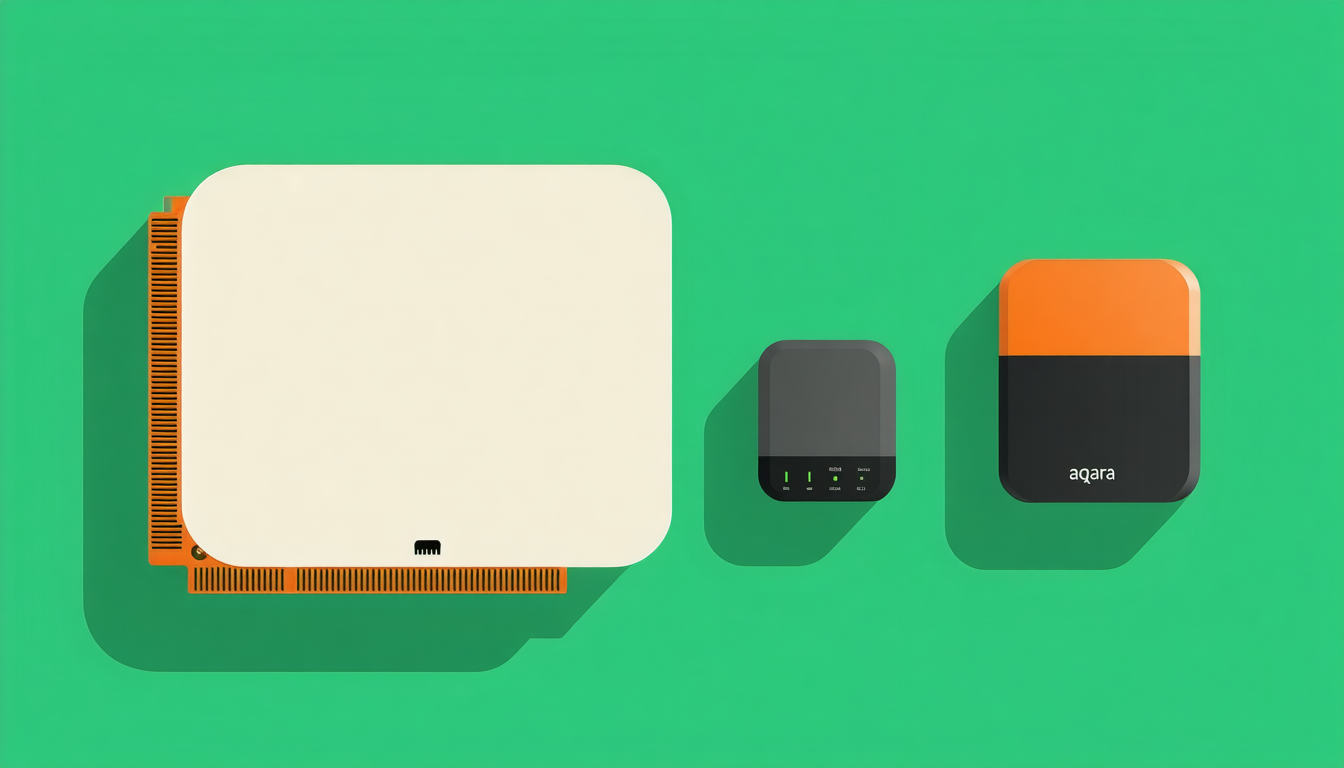
Moving apartments shouldn’t mean abandoning your smart home setup. Renters face a unique problem: they need automation that installs without landlord permission, moves easily between homes, and protects their privacy from cloud-dependent systems. This guide compares Aqara, SwitchBot, and Tuya hubs across the factors that actually matter when you’re renting – setup time, local control options, and how cleanly everything resets when you hand back the keys.
Quick Comparison Table
| Criteria | Aqara Hub M3 | SwitchBot Hub Mini | Tuya Zigbee Hub |
|---|---|---|---|
| No-wiring setup | Yes – USB-C power | Yes – USB-A power | Yes – USB or wall plug |
| Drill-free install | Sits on shelf or desk; optional adhesive mount | Sits on shelf; no mounting needed | Sits on shelf; no mounting needed |
| Protocols supported | Zigbee 3.0, Matter, Thread, IR, BLE | BLE, IR, Wi-Fi (no native Zigbee) | Zigbee 3.0 (Wi-Fi bridge model dependent) |
| Data residency | Cloud optional; local automation supported | Cloud-dependent for most features | Cloud-dependent; servers often in China |
| Ecosystem lock-in risk | Low – Matter/Thread reduces lock-in | Medium – proprietary SwitchBot accessories encouraged | High – fragmented; brand-to-brand compatibility varies |
| Move-out factory reset | Yes – one button or app reset; clean wipe | Yes – button reset; straightforward | Yes – app or button reset; varies by brand |
| Apple Home / Google Home / Alexa | All three via Matter | Google Home and Alexa natively; Apple Home only via Matter-enabled SwitchBot devices on supported firmware – verify per device before buying. | Google Home and Alexa; Matter support unconfirmed – verify before buying |
| Approximate CAD price (hub only) | $75 – $95 CAD | $40 – $55 CAD | $20 – $40 CAD |
How We Picked These Criteria
Renters face a specific set of constraints that homeowners do not. A landlord can refuse to let you install a smart thermostat that needs new wiring. A building manager can flag holes in drywall. When you move, everything has to come with you cleanly. With those constraints in mind, we evaluated each hub on five criteria:
- No-wiring setup: Does the hub and its most popular accessories work without touching your breaker box, running low-voltage cable, or replacing switch plates? A renter cannot do any of that without written permission.
- Drill-free install: Can you place or mount devices without drilling? Adhesive options and shelf placement count. Anything that requires a drill bit is a lease risk.
- Data residency: Where does your automation data live? For a renter moving between provinces or cities, cloud dependency is a practical concern. Local processing is a privacy and reliability bonus.
- Ecosystem lock-in: If the company folds or changes its pricing, can you migrate your devices? Standards like Matter and Zigbee 3.0 reduce risk. Proprietary protocols increase it.
- Move-out factory reset: How easy is it to wipe all personal data from every device before you hand keys back? This matters for security and for reselling gear you are not taking to the next place.
Aqara Hub M3
Specs and What You Get
The Aqara Hub M3 is currently one of the most capable consumer smart-home hubs available in Canada without professional installation. Key specs:
- Protocols: Zigbee 3.0, Thread, Matter (controller and border router), IR blaster, Bluetooth 5.0
- Power: USB-C; no wall wiring required
- Dimensions: Approximately 96 x 96 x 27 mm – flat puck shape
- Local automation: Yes – automations run locally even without internet
- Matter support: Acts as a Matter border router, exposing Aqara Zigbee devices to Apple Home, Google Home, and Amazon Alexa simultaneously
- Approximate CAD price: $75 – $95 CAD on Amazon.ca or at Best Buy Canada
- Connectivity: Wi-Fi 2.4 GHz and Ethernet (Ethernet port included)
What It Does Well
For a renter, the M3 is the most future-proof option in this comparison. Because it supports Matter and acts as a Thread border router, the Zigbee sensors and switches you buy today can be exposed to any Matter-compatible platform. If you move and decide to switch from Apple Home to Google Home, you do not have to rebuy devices. The local automation engine means your motion sensors and lights will still respond even during an internet outage – useful when your ISP has issues on a Monday morning.
The Aqara accessory lineup for renters is genuinely strong: the E1 radiator thermostat, door and window sensors, motion sensors with light sensitivity, and – critically – the Aqara Smart Lock series, which installs over your existing deadbolt without replacing the cylinder. No drilling, no locksmith, no landlord conversation needed for most of the lineup.
Honest Trade-offs
Aqara’s app has historically been clunky. The experience has improved but it remains less polished than SwitchBot’s interface. The M3 is also the most expensive hub in this comparison by a clear margin. If you only want to automate a lamp and an IR-controlled air conditioner, spending $85 on a hub is hard to justify. Setup also requires more technical comfort than the other two options – you will be assigning Zigbee channels, understanding Matter pairing modes, and navigating a hub admin page. That is fine for a homelab reader but may frustrate a less technical partner or roommate.
Data Residency and Privacy
Aqara’s servers are operated by Lumi United Technology, a Chinese company. Cloud data does flow through servers in that jurisdiction unless you use local-only mode. The good news: Matter-based local automations do not require cloud at all. For privacy-conscious renters, running the M3 in primarily local mode with cloud disabled is a real option. That said, firmware updates do require cloud access, and Aqara’s privacy policy should be reviewed before purchase if data residency is a hard requirement for you.
Move-Out Reset
Factory resetting the M3 is a documented single-button process. Aqara’s app also lets you remove all devices and automations before the physical reset. For accessories like door sensors, a long-press reset is standard across the product line. Clean and manageable for a move-out weekend.
Who Should Buy It
Renters who want a long-term ecosystem that moves with them across apartments and survives platform changes. Homelab operators who want local automation and Matter compatibility. Anyone building beyond five or six devices who values interoperability over simplicity.
SwitchBot Hub Mini
Specs and What You Get
The SwitchBot Hub Mini is the easiest entry point for Canadian renters who want immediate results without reading documentation. Key specs:
- Protocols: Bluetooth Low Energy (for SwitchBot accessories), IR blaster (for TVs, AC units, fans), Wi-Fi 2.4 GHz
- Power: USB-A cable; plugs into any USB charger or smart plug
- Dimensions: Approximately 62 x 62 x 15 mm – credit card footprint
- Local automation: Limited – most automations require cloud; some local scenes available with SwitchBot accessories on firmware updates
- Matter support: Some SwitchBot devices support Matter as of late 2024 updates; full Matter hub functionality unconfirmed – verify before buying
- Approximate CAD price: $40 – $55 CAD on Amazon.ca
- Zigbee support: No native Zigbee on the Hub Mini; requires separate SwitchBot Hub 2 for Zigbee-adjacent features
What It Does Well
SwitchBot excels at the exact problem most Canadian renters actually have: “I want to make my dumb apartment smarter without my landlord knowing.” The SwitchBot Bot (a physical button pusher) can automate existing wall switches without touching wiring. The SwitchBot Curtain and Curtain 3 clip onto any curtain rod – no drilling, no mounting holes. The lock add-on fits over most Canadian deadbolts. IR control via the Hub Mini means your old window AC unit gets a schedule. All of this connects in fifteen minutes through an app that non-technical users can navigate on their own.
The price point is the lowest of the three options, and the Amazon.ca availability is reliable. If your budget for the entire starter setup is under $150 CAD, SwitchBot delivers the most visible automation wins fastest.
Honest Trade-offs
The Hub Mini does not speak Zigbee. That is a significant limitation if you want to add third-party sensors, bulbs, or plugs from the wide Zigbee market. You are being steered toward SwitchBot-branded accessories for anything beyond IR. That is not necessarily bad – SwitchBot hardware is decent – but it does increase lock-in risk. If SwitchBot raises prices, discontinues a product, or gets acquired, your options are narrower than with an open-standard Zigbee setup.
Cloud dependency is real. Several SwitchBot automations route through SwitchBot’s servers even for simple on-off scheduling. If your internet drops, scheduled curtain openings may not fire. For a renter who travels frequently and relies on remote access, this is worth understanding before buying.
Data Residency and Privacy
SwitchBot is operated by a company based in Japan with cloud infrastructure across multiple regions. The privacy situation is somewhat better than pure Chinese-cloud platforms, but data still flows through SwitchBot’s servers for most automations. There is no documented fully local mode as of this writing. If data residency is a hard requirement, SwitchBot is not your best option here.
Move-Out Reset
The Hub Mini has a physical reset button. SwitchBot’s app lets you remove all devices from your account before resetting hardware. The process is simple and well-documented in their support pages. The larger challenge is resetting individual accessories – the Bot, Curtain, and Lock each have their own reset procedures, but all are documented and involve button presses only, no tools needed.
Who Should Buy It
Renters who want fast visible wins with zero technical setup. Anyone who needs to automate IR-controlled devices (window AC units are extremely common in Canadian rental apartments). Budget-conscious tenants whose total device count will stay under ten units.
Tuya Zigbee Hub
Specs and What You Get
The “Tuya Zigbee Hub” is not a single product – it is a category. Dozens of brands on Amazon.ca sell Zigbee hubs running the Tuya Smart platform: Moes, NOUS, Zemismart, Blitzwolf, and other generic white-label units. We are evaluating the platform and the category, not one SKU. Typical specs:
- Protocols: Zigbee 3.0 (Wi-Fi gateway to cloud); some models add IR
- Power: USB or direct wall plug depending on model
- Dimensions: Varies widely by brand – typically small wall-plug or USB-stick form factor
- Local automation: Limited; Tuya’s local API exists but requires technical setup (Home Assistant integration); out of the box, cloud-dependent
- Matter support: Tuya has announced Matter support; actual device-level implementation is unconfirmed – verify before buying for any specific SKU
- Approximate CAD price: $20 – $40 CAD on Amazon.ca depending on brand and model
What It Does Well
Price. If you want to get a Zigbee network running for under $25 and you already know you want to run Home Assistant on a Raspberry Pi or a used mini PC in your homelab, Tuya Zigbee hardware is extremely affordable. The device selection is massive – Zigbee 3.0 sensors, plugs, bulbs, and switches from countless brands are Tuya-compatible, and the ecosystem breadth is unmatched at this price range. For someone who plans to strip the Tuya cloud layer out and run everything locally through Home Assistant, the low hub cost is a genuine advantage.
Honest Trade-offs
Out of the box, Tuya is the most cloud-dependent option in this comparison. Automations route through Tuya’s servers, which are primarily located in China. The platform has had documented service outages that rendered devices temporarily unresponsive. Brand fragmentation means a hub from one Tuya-branded vendor may not cleanly control accessories from another, even though both claim “Tuya compatibility.” You need to cross-reference specific pairings before buying.
The app experience (Smart Life or Tuya Smart) is functional but can feel inconsistent across device categories. Customer support for generic white-label Tuya products ranges from nonexistent to forum posts. For a non-technical renter who just wants it to work, this is a frustrating category. For a homelab user who treats this as raw material for Home Assistant, that same roughness is acceptable because you are replacing the app layer entirely.
Data Residency and Privacy
This is the weakest area for Tuya in a renter context. Unless you redirect traffic through a local Home Assistant instance using the Tuya Local API or the LocalTuya integration, your device state, automation triggers, and usage patterns are sent to Tuya’s cloud. For renters who have roommates or who automate door sensors and locks, this is a meaningful consideration. Tuya does offer a data center region selector in some configurations, but implementation varies. If privacy is important to you, treat Tuya as a “local-only via Home Assistant” platform rather than a standalone cloud platform.
Move-Out Reset
Individual Tuya Zigbee devices reset via long-press button sequences – standard across the category. Removing devices from a Tuya or Smart Life account is handled in-app. Because devices are sold under many brand names, reset procedures are not always prominently documented, but the underlying Zigbee pairing reset (hold button until light flashes) is consistent. Hub reset is typically a pinhole button. Manageable, but less polished than the other two options.
Who Should Buy It
Homelab operators who plan to run Home Assistant and want cheap Zigbee nodes without caring about the out-of-box cloud app. Technically comfortable renters building a local-first setup. Anyone buying Zigbee sensors in bulk on a tight budget who will integrate them into an existing platform.
Recommendation Matrix
- If you want the lowest lock-in risk and plan to keep devices through multiple moves, get the Aqara Hub M3. Matter and Zigbee 3.0 mean your sensors outlast any single app ecosystem.
- If you want to automate your rental apartment this weekend with zero technical reading, get the SwitchBot Hub Mini. The app is approachable, the accessories are renter-friendly, and the IR blaster handles that old window AC unit your building refuses to replace.
- If you are running Home Assistant on a mini PC in your homelab and want cheap Zigbee nodes, buy a Tuya Zigbee Hub and strip the cloud layer out with LocalTuya or the Home Assistant Tuya integration in local polling mode. For a fully offline Zigbee network, replace the Tuya hub with a dedicated Zigbee coordinator dongle and run Zigbee2MQTT separately. Do not use a Tuya hub as a standalone consumer platform.
- If data residency and local-first privacy matter most to you, go with the Aqara Hub M3 in local automation mode, or the Tuya hardware redirected through Home Assistant on your own network.
- If your budget is under $50 CAD all-in for the hub, the SwitchBot Hub Mini is the better value over a generic Tuya hub unless you are a homelab operator doing your own integration work.
All three hubs are available on Amazon.ca. Prices fluctuate – check current listings and confirm specs against the manufacturer page before purchasing, as product revisions in this category happen without notice. When in doubt, a renter’s best posture is to buy the hub last, after confirming the specific accessories you need are compatible with it.
Related Auburn AI Products
Building a homelab or self-hosting content site? Auburn AI has practical kits:
- 500 Homelab and Self-Hosting Blog Titles ($27)
- Auburn AI Monitoring Stack ($37) – 6 production PowerShell scripts
- Podcast Automation Kit ($37)
- Browse all Auburn AI products
Part of Our Complete Guide
This article is part of our comprehensive guides: