
In this guide (jump ahead)
- Background: What the Software Actually Demands
- The Core Decision: Pi 4 2GB vs Pi 5 4GB
- Audio Interface: Behringer UCA222 vs UMC22
- Full Bill of Materials
- microSD Card: Don’t Cheap Out Here
- Power Supply: Official PSU vs USB-C Battery Bank
- Expression Pedal for Wah and Volume
- Assembly: What You Actually Need to Do
- How This Compares to Commercial Alternatives
- Conclusion: Which Build Should You Buy?
- Related Auburn AI Products
- Part of Our Complete Guide
- Related HomeNode guides
See also: The Self-Hosting Stack: Complete 2026 Guide.
AI-narrated version of this post using a synthetic voice. Great for accessibility or listening while busy.
# Cheapest Raspberry Pi Guitar Amp Modeler Rig Under $250 in 2026
If you’ve already read our original breakdown of turning a Raspberry Pi into a real-time guitar amp modeler, you know it’s genuinely doable. What that post didn’t answer was: *what’s the cheapest version that actually works without making you want to throw the whole thing across the room?* That’s what this is.
The target here is a functional rig — guitar in, modelled amp tone out, playable latency — for under $250 as of May 2026. Not a demo. Not a “it works if you stand still and don’t breathe.” Something you’d actually use at a rehearsal or for home recording.
—
Background: What the Software Actually Demands
Neural amp modelers on Pi fall into three real options right now:
See also: Amazon Prime Day 2026: The Home Lab Deals Actually Worth Buying (NAS, Mini PC, Networking, UPS)
- Neural Amp Modeler (NAM 0.7.x) — the most popular, runs
.nammodel files, decent CPU headroom on Pi 5, brutal on Pi 4 at low buffer sizes - GuitarML Proteus — lighter-weight, uses
.jsonWaveNet models, more forgiving on older hardware - Aida-X — LV2 plugin, runs inside MOD Audio’s stack or straight into Zita/PipeWire chains, good community support
The entire budget exercise lives or dies on one number: round-trip audio latency. You need to stay under roughly 12ms for it to feel like an amp rather than a monitor mix. At 48kHz with a 128-sample buffer, you’re at about 5.3ms of pure buffer latency before you add USB transfer overhead. That’s the target zone.
—
The Core Decision: Pi 4 2GB vs Pi 5 4GB
This is where the budget splits.
See also: Best Father’s Day Tech Gifts $100-$250 in 2026: The Premium Tier
Pi 4 2GB — roughly $55–65
The BCM2711 (Cortex-A72, 1.8GHz quad-core) can run NAM 0.7.x, but not comfortably at 64-sample buffers with anything heavier than a clean or light-crunch .nam model. Running a high-gain model like a Mesa Boogie Rectifier capture at 64 samples / 48kHz on a Pi 4 will get you xrun dropouts within a minute or two of palm-muted chugging. The NEON SIMD path in NAM helps, but the BCM2711 just doesn’t have the headroom.
Where Pi 4 *does* work: Proteus at 128-sample buffers sits around 10–11ms total and runs clean. Aida-X with smaller LSTM models is fine too. If your goal is clean tones or mild overdrive, or you’re okay with Proteus’s model library, Pi 4 gets you there.
Real latency with Pi 4 + UCA222 + NAM, 128-sample buffer at 48kHz: ~11–13ms round trip, depending on USB jitter. Usable. Not great.
Pi 5 4GB — roughly $95–105
The BCM2712 (Cortex-A76, 2.4GHz quad-core) is a different machine for this workload. NAM 0.7.x at 64 samples / 48kHz runs comfortably on all but the heaviest multi-stage models. Total round-trip latency lands around 6–8ms with a decent USB interface. You can run a high-gain Dumble or Rectifier capture, add a cab IR block, and still have CPU headroom to spare.
The Pi 5 also benefits from the RP1 I/O controller’s better USB handling compared to the BCM2711’s integrated USB — you’ll see fewer xruns on sustained heavy playing.
Verdict for this budget: If you can stretch to Pi 5, do it. The $35–40 difference buys you headroom that actually matters. The Pi 4 build is documented below as the budget floor, but the Pi 5 is the recommended path.
—
Audio Interface: Behringer UCA222 vs UMC22
Behringer UCA222 — ~$20–25
The UCA222 is USB class-compliant, plug-and-play on Raspberry Pi OS with no driver fiddling. That’s its main virtue. The instrument input is not a proper high-impedance guitar input — it’s a stereo RCA plus a single 1/4″ input at around 10kΩ impedance. A passive single-coil pickup will sound thin and slightly high-frequency-harsh through it.
The converters are adequate. The headphone amp output is weak — don’t expect it to drive anything over 32Ω efficiently.
Minimum viable? Yes. For a first build or a kid’s bedroom rig, absolutely. For anything you’d want to record from, no.
Latency note: The UCA222 typically runs stable at 128-sample buffers. At 64 samples, you’ll see intermittent xruns under USB bus load. Stick to 128.
Behringer UMC22 — ~$50–60
The UMC22 has a proper MIDAS-designed preamp, instrument-level Hi-Z input on channel 1, 48V phantom (not relevant here, but nice), and a much better headphone output. It also runs USB class-compliant on Pi with no extra setup.
The converters are noticeably cleaner. At 48kHz/24-bit, the noise floor is good enough that you’ll hear the character of your amp model rather than a hash of interface noise underneath it.
The actual choice: If you’re on a Pi 5 build and taking this seriously, spend the extra $30 on the UMC22. If you’re on a Pi 4 budget floor build, the UCA222 works but manage your expectations on tone quality.
—
Full Bill of Materials
Here’s the complete shopping list, with two tiers.
See also: Best Bluetooth Audio Adapters for Home Office and Travel 2026
Tier 1: Pi 4 Budget Floor
| Item | Approx. | |—|—| | Raspberry Pi 4 2GB | $60 | | Behringer UCA222 | $22 | | SanDisk Endurance 32GB microSD | $14 | | Official Raspberry Pi 27W USB-C PSU | $18 | | Short USB-A to USB-B cable (for UCA222) | $6 | | 1/4″ instrument cable (you probably have one) | $0–12 | | Tier 1 Total | ~$120–132 |
Tier 2: Pi 5 Recommended Build
| Item | Approx. | |—|—| | Raspberry Pi 5 4GB | $100 | | Behringer UMC22 | $55 | | SanDisk Endurance 32GB microSD | $14 | | Official Raspberry Pi 27W USB-C PSU | $18 | | Short USB-A to USB-B mini cable | $6 | | Instrument cable | $0–12 | | Tier 2 Total | ~$193–205 |
Optional Additions (to reach but not exceed $250)
| Item | Approx. | |—|—| | M-AUDIO Expression Pedal EX-P | $35 | | Cheap 1/4″ TRS Y-splitter for stereo headphone monitoring | $8 | | Aluminum Pi 5 case with passive cooling | $18 |
Add all three optionals to Tier 2 and you land at roughly $254–264 — just over the line, but you can skip the case initially (a naked Pi 5 runs fine for bench use).
—
microSD Card: Don’t Cheap Out Here
The single dumbest place to save $5 in this build is the microSD card. A generic card will cause filesystem stalls that look like audio dropouts and take you hours to diagnose. Use the SanDisk High Endurance 32GB (the one marketed for dashcams — part number SDSQQNR-032G or similar). It handles repeated small writes, which is exactly what a headless Pi audio appliance does constantly with logs and JACK state files.
32GB is more than enough. NAM model files are a few hundred KB each. A full Aida-X + HiFiBerry image with 50 captures and IR files fits comfortably under 8GB.
—
Power Supply: Official PSU vs USB-C Battery Bank
The Official Raspberry Pi 27W USB-C PSU is the right call for a fixed home rig. It delivers clean, stable 5.1V. The Pi 5 specifically will throttle under load if it sees anything less than 5V and will log voltage warnings that are annoying to chase down.
USB-C battery banks work, but with caveats. The Pi 5 requires a PD-negotiated 5V/3A supply minimum. Most modern 65W+ laptop-grade banks (Anker 737, Baseus 65W, etc.) will negotiate this correctly. Cheap 10,000mAh phone banks often won’t, and you’ll get the lightning bolt undervoltage icon and random reboots. If you want a battery-powered pedalboard-style rig, budget for a proper PD bank and test it before your rehearsal, not during.
For the purposes of this build, use the official PSU. It’s $18 and it eliminates an entire category of debug.
—
Expression Pedal for Wah and Volume
The M-AUDIO EX-P (~$35) works with essentially every software stack here. It’s a passive resistive pedal that outputs a 0–5V control signal over a 1/4″ TRS connection. With Aida-X running inside MOD Audio’s environment, you can map it to wah position or volume directly in the patch routing. With a raw JACK/NAM setup, you’ll need a USB-MIDI footcontroller or a separate expression-to-MIDI converter to use it — the Pi’s GPIO can do this with a simple Python script and a voltage divider, which we’ll cover in a future post.
If you’re not planning wah tones, skip the expression pedal and save $35.
—
Assembly: What You Actually Need to Do
The steps that matter:
1. Flash the microSD with Raspberry Pi OS Lite (64-bit) using Raspberry Pi Imager. Enable SSH in the imager tool before writing — saves you hunting for a keyboard and monitor. 2. Boot, SSH in, run sudo apt update && sudo apt upgrade -y, then install JACK2: sudo apt install jackd2 a2jmidid. 3. Plug in your UCA222 or UMC22 before you start JACK. Confirm it shows up: aplay -l. You want to see it listed before you configure anything. 4. Configure JACK to use the USB device, 48kHz, 128-sample (or 64-sample on Pi 5) buffer, 2 periods. There are dozens of tutorials on the exact jackd invocation — follow one specific to your interface model. 5. Install NAM via the compiled binary for ARM64 (the NAM project provides these), or pull Aida-X into a MOD Audio image. The MOD Audio route is friendlier for beginners; you get a browser-based pedalboard UI over Wi-Fi. 6. Download a couple of .nam captures from the NAM Exchange or ToneHunt. Copy them to the Pi via scp. Load one up, strum, adjust output level.
The steps you can skip:
- Building NAM from source. The ARM64 binaries work. You don’t need to compile anything.
- Any kind of display or case initially. Run headless via SSH until you know the audio stack is working.
- A dedicated USB hub. Both interfaces draw well under 500mA. The Pi 4/5 USB ports handle them fine without a powered hub.
- Overclocking. The Pi 5 at stock 2.4GHz is sufficient. Overclocking adds instability for marginal gain.
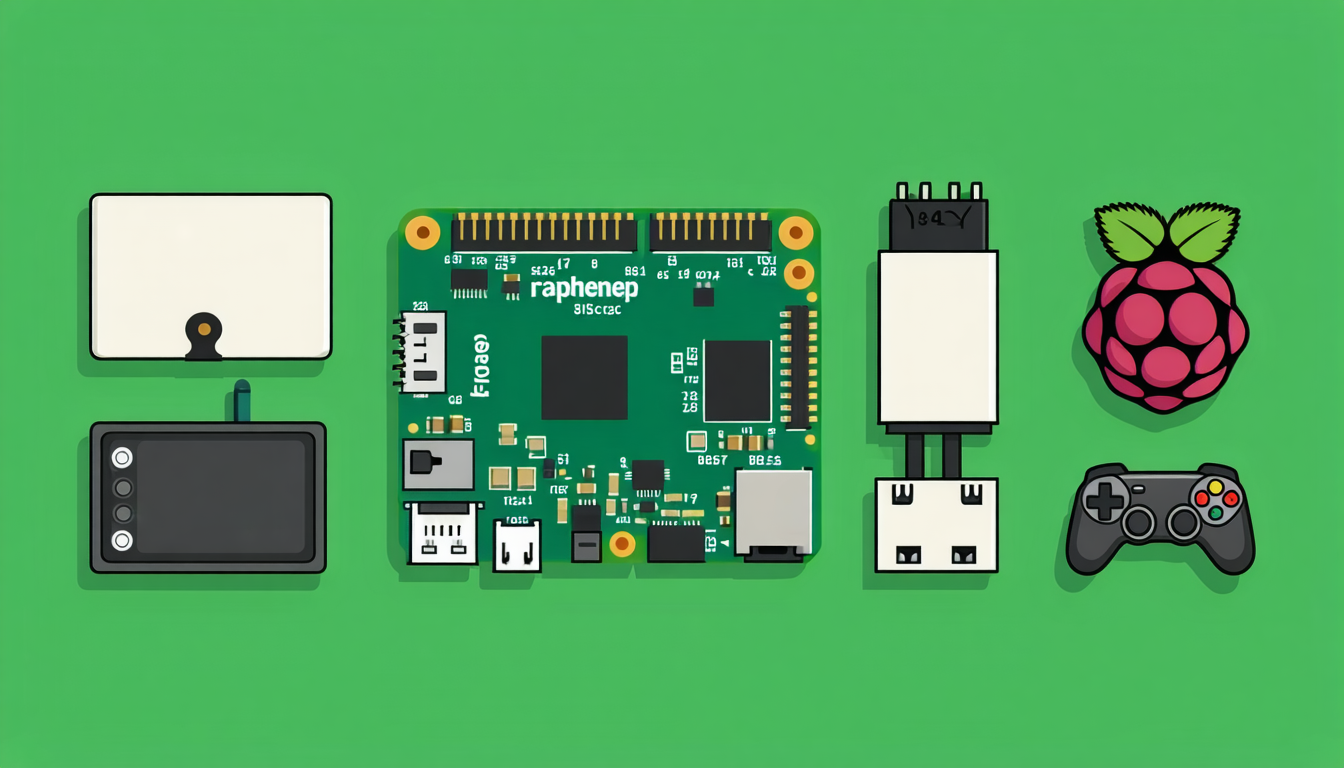
What the assembled rig looks like: Pi board flat on a desk, UMC22 sitting next to it connected by a short USB cable, guitar plugged into the front Hi-Z input, headphones into the headphone jack on the UMC22, SSH terminal open on your laptop. That’s it. No enclosure required to validate that it works.
—
How This Compares to Commercial Alternatives
| Option | Price (, approx.) | Latency | Flexibility | |—|—|—|—| | Pi 5 + UMC22 (Tier 2 build) | $205 | 6–8ms | Very high — any model, any IR | | Mooer GE150 | $200–230 | ~5ms | Fixed DSP, built-in amp models | | Boss Katana Air | $450–520 | N/A (analog amp) | Limited modelling | | Neural DSP Quad Cortex | $2,100+ | ~4ms | Extremely high, but not DIY |
The Mooer GE150 is the honest comparison at this budget. It sounds good out of the box, has a real expression pedal jack, built-in looper, and you’re done in five minutes. The Pi rig beats it on model variety (access to thousands of community NAM captures vs. Mooer’s fixed library) and wins on cost if you already own a cable and an interface.
The Quad Cortex isn’t competition — it’s in a completely different cost tier. It’s only listed to anchor what “professional” costs.
—
Conclusion: Which Build Should You Buy?
Build the Tier 1 Pi 4 rig if: You want the absolute cheapest proof-of-concept, you’re comfortable with Proteus or Aida-X’s lighter model formats, and you’re mostly playing clean to moderate-gain tones. Keep your buffer at 128 samples and don’t expect miracles from the UCA222’s instrument input.
Build the Tier 2 Pi 5 rig if: You want to actually use this as a regular practice or recording tool, you play high-gain styles, or you want access to the full NAM capture library without babysitting buffer settings. The $80 jump from Tier 1 to Tier 2 is the most cost-effective upgrade available in this build.
Skip this project entirely and buy a Mooer GE150 if: You don’t want to SSH into anything. Both are valid choices. The Pi rig rewards people who find the tinkering part interesting, not just the guitar playing part.
Part of Our Complete Guide
This article is part of our comprehensive guide:
Related HomeNode guides
- Best USB Audio Interfaces for Raspberry Pi Guitar Rigs in 2026
- 7 Best Bluetooth Controllers for Raspberry Pi Gaming in 2026
- Best Father’s Day Tech Gifts $100-$250 in 2026: The Premium Tier
- 5 Best Raspberry Pi Starter Kits for Young Tech Enthusiasts (2026)
Frequently asked questions
How were these products selected?
This guide is a research-based synthesis of product specs, brand reputation, current Amazon reviews, and category trends. It is not a hands-on review – use it to narrow options before you buy.
What price range should I expect?
Prices vary significantly across the categories above. Entry options start at the lower end of each tier listed, while premium picks can be several times more. Amazon pricing changes frequently, so confirm current numbers on the product listings.
Should I always buy the most expensive option?
Not necessarily. Premium products offer better materials, longer warranties, and higher-end features, but mid-tier picks meet the needs of most buyers. Match the pick to your actual use case rather than defaulting to the top of the price range.
How often is this guide updated?
This guide is refreshed as new products launch and older picks are discontinued. Amazon pricing and stock change daily – always confirm current price and availability on Amazon before purchase.
Where is the best place to buy?
Amazon is linked throughout this guide because it typically has broad selection, current pricing, and standardized return policies. Direct manufacturer sites and specialty retailers are also options depending on category and preference.
Shop the Amazon Storefront
Every mini PC, NAS, and networking pick from HomeNode – curated for home lab builders in one Amazon Storefront.
Try Amazon Prime free for 30 days – fast shipping on home lab gear plus Prime Video streaming
As an Amazon Associate and Amazon Influencer, we earn from qualifying purchases at no extra cost to you.