AI-narrated version of this post using a synthetic voice. Great for accessibility or listening while busy.
AI assistance: Drafted with AI assistance and edited by Auburn AI editorial.
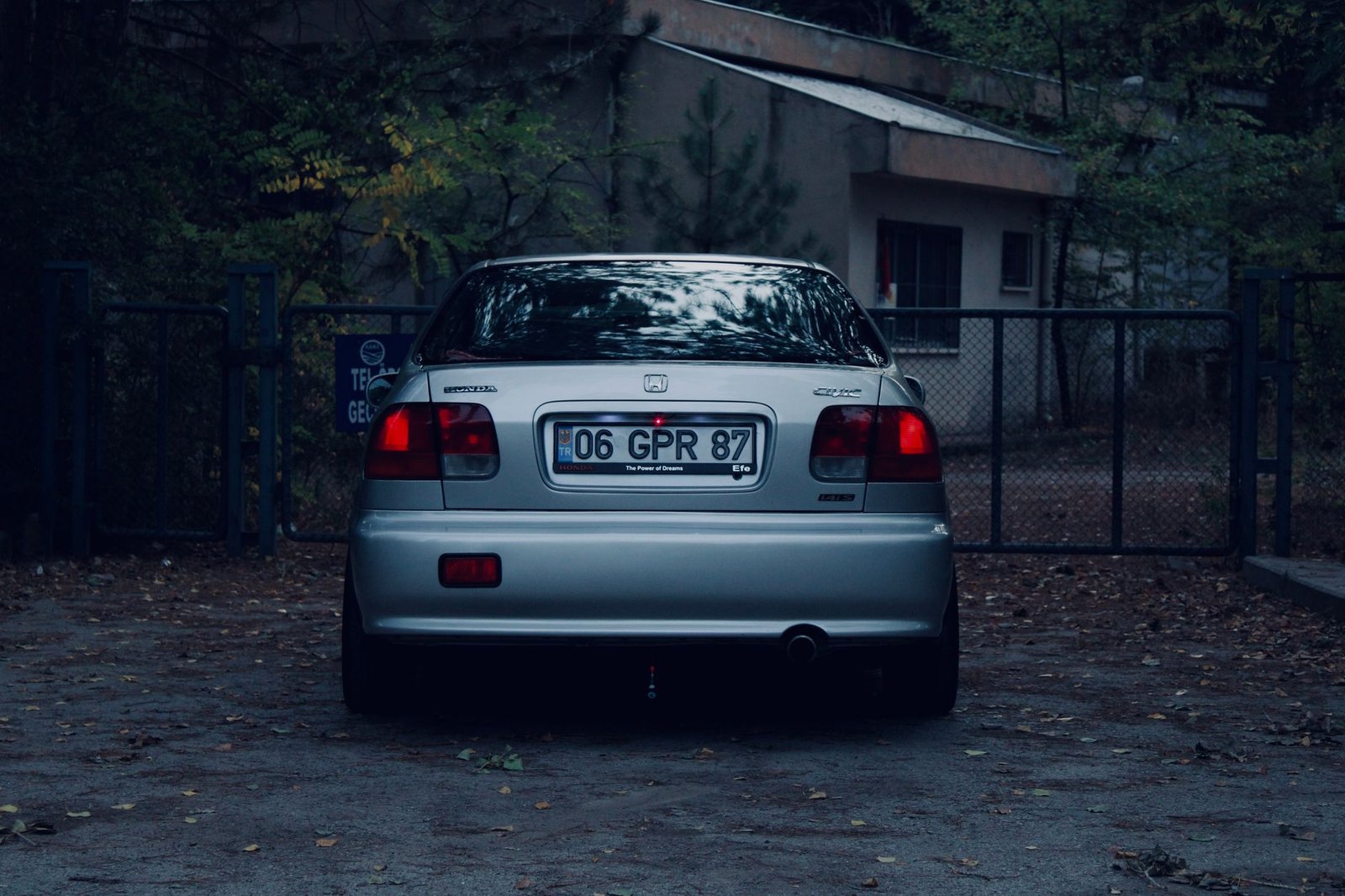
Honda Civics and the Evil Valet: The Complete Guide to Protecting Your Car’s Infotainment Data
You pull up to a restaurant, hand your keys to a stranger, and walk inside. The valet parks your car. Routine. But in the two or three minutes they have alone with your Honda Civic, someone with the right knowledge and a USB drive could walk away with your contact list, your home address, your paired phone’s Bluetooth identifier, and a log of everywhere you’ve been. This is the “evil valet” problem — and it’s more grounded in real reverse-engineering work than most car owners realize.
This guide covers what Honda Civic infotainment systems actually store, what the research community has found through hands-on reverse engineering, and the concrete steps you can take before you hand over your keys.
As an Amazon Associate, I earn from qualifying purchases at no extra cost to you.
The Honda Civic Infotainment System: What’s Actually Under the Hood
Honda’s infotainment units — particularly those found in the 2016–2022 Civic generations running the Display Audio platform — are more computer than radio. They run a Linux-based OS, store data to internal flash memory, and maintain logs that persist across ignition cycles. A community reverse-engineering project documented on Hacker News in May 2023 (the “Show HN: Honda Civic Infotainment Reverse-Engineering” thread, 43 comments) cracked open what that storage actually contains.
What surprised us when researching this was how little Honda communicates to owners about what data persists and for how long. The infotainment unit is not wiped when you restart the car. It is not wiped when you disconnect a Bluetooth device. In many cases, it is not even fully wiped by the factory reset option in the settings menu — a finding the reverse-engineering community flagged specifically.
The categories of data most commonly identified in this research include:
- Paired Bluetooth device names and MAC addresses
- Imported contacts from connected phones (via Bluetooth phonebook access)
- Navigation history, including saved home and work addresses
- Recent call logs mirrored from the paired phone
- Wi-Fi network SSIDs and, in some configurations, credentials
- Apple CarPlay and Android Auto session artifacts
None of this requires a sophisticated attack. A valet with a USB drive and a preconfigured script — or even just patience with the settings menu — can access meaningful personal data in a short window. The “evil valet” framing comes from the security research concept of an adversary who has brief, unsupervised physical access to a device. Your car qualifies.
This isn’t a Honda-specific failure. Similar findings have emerged across Toyota, Hyundai, and Mazda platforms. The Civic gets specific attention because of its sales volume in Canada and the US, and because the Display Audio platform is well-documented enough for community researchers to actually dig into it.
Privacy Protection Tools at a Glance
Before we get into the detailed breakdown, here’s a quick reference for the physical and software tools worth having if you regularly use valet parking or share your vehicle.
| Product | Best For | Price (CAD) | Key Feature | Buy |
|---|---|---|---|---|
| USB Data Blocker (PortaPow) | Blocking USB data transfer via the car’s USB port | $12–$18 | Passes power only, blocks data lines | View ↗ |
| Faraday Key Fob Pouch | Preventing relay attacks on keyless entry | $15–$30 | RF-shielded pouch blocks key signal amplification | View ↗ |
| Valet Key (OEM Honda) | Limiting physical access without a glove box key | $40–$80 cut and programmed | Ignition only, no trunk or glove box access | View ↗ |
| GPS Tracker (LandAirSea 54) | Monitoring vehicle location during valet | $55–$75 + subscription | Real-time cellular tracking, compact form | View ↗ |
Detailed Tool Reviews: Protecting Your Civic from the Evil Valet
1. USB Data Blocker — PortaPow Fast Charge USB Data Blocker
Best for: Anyone who regularly connects a phone to their Civic’s USB port and wants to prevent data transfer when the car is out of their control.
The PortaPow USB data blocker is a passive adapter that sits between your USB cable and the car’s port. It physically disconnects the data lines — D+ and D− — while leaving the power lines intact. A valet who plugs a USB drive into your Civic’s port to attempt a data pull gets nothing. The car charges a device; it doesn’t transfer files.
This matters because the Honda Display Audio USB port is the primary documented vector for extracting infotainment data in the community research. It’s also the same port CarPlay and Android Auto use, so you’ll be removing it before handing over the keys anyway.
The PortaPow unit is small enough to live on your keychain. It works with USB-A connections, which covers most Civic model years through 2022. Newer models with USB-C ports will need a USB-C equivalent — those exist, though the market is thinner.
Pros:
- Passive — no battery, no software, no failure modes
- Inexpensive and widely available in Canada
- Works immediately with no configuration
Cons:
- Doesn’t address Bluetooth-based data exposure
- USB-C version requires a separate purchase
2. Faraday Key Fob Pouch
Best for: Civic owners with keyless entry who want to prevent relay-based theft while also thinking carefully about what they hand a valet.
The evil valet problem has a physical cousin: relay attacks on keyless entry fobs. A two-person team — one near your house, one near the car — can amplify your fob’s signal to unlock and start a keyless vehicle. A Faraday pouch blocks that signal entirely when the fob is stored inside it.
For valet situations specifically, the pouch is useful before and after: keep your spare fob in it at home so it can’t be relay-attacked while your primary fob is with the valet. Basic RF-shielded pouches from brands like TICONN or Faraday Defense run $15–$25 CAD and are effective when the seams are properly shielded. Check the seal quality — cheap versions with poor closure stitching leak signal.
Pros:
- Addresses a real, documented theft vector
- Inexpensive and low-maintenance
- Works for any keyless entry vehicle, not just Civics
Cons:
- Quality varies significantly between brands
- Doesn’t address infotainment data directly
3. LandAirSea 54 GPS Tracker
Best for: Civic owners who want real-time visibility into where their car goes during a valet — and a record if something goes wrong.
The LandAirSea 54 is a compact cellular GPS tracker that reports location in near real-time via a companion app. Hidden under a seat or in a wheel well with its magnetic mount, it gives you a complete movement log for the duration of any valet. If your car is taken somewhere it shouldn’t go, you know immediately.
It requires a monthly subscription (plans vary, roughly $20–$30 CAD/month) and a cellular data connection. In Calgary and most major Canadian cities, coverage is solid. Rural gaps exist, as with any cellular device.
This doesn’t prevent the honda civics evil valet data problem — it doesn’t touch the infotainment system. But it closes the physical accountability gap. If a valet joyrides your Civic, you have timestamped evidence.
Pros:
- Real-time tracking with geofence alerts
- Compact and easy to conceal
- Waterproof housing, magnetic mount included
Cons:
- Ongoing subscription cost
- Doesn’t address data extraction risk
Common Mistakes Honda Civic Owners Make Before Handing Over Keys
Most people focus on the key itself. The key is the least of your worries.
Mistake 1: Assuming the factory reset wipes everything. The Honda Display Audio factory reset, accessible through the settings menu, does not reliably erase all stored data according to the reverse-engineering research. Paired device records and navigation history may persist in flash memory regions the reset routine doesn’t touch. Do not rely on this as your primary privacy measure.
Mistake 2: Leaving CarPlay or Android Auto connected. When your phone is actively connected via CarPlay or Android Auto, the infotainment system has live access to your contacts, messages, and maps. Disconnect your phone before handing over the keys. This is the single easiest and most impactful step you can take.
Mistake 3: Storing home address as “Home” in the navigation system. This is the most consistently flagged risk in the research community. A saved “Home” address tells a bad actor exactly where you live and, by extension, when you’re likely not there (you’re at the restaurant right now). Use an address a block away, or don’t save home at all.
Mistake 4: Handing over a full key ring. If your Honda Civic has a valet key — a key that operates the ignition and doors but not the glove box — use it. Keep your main key with you. The glove box is where registration, insurance slips, and sometimes garage door openers live.
Mistake 5: Not unparing Bluetooth devices beforehand. Bluetooth pairing records persist. A device name like “John’s iPhone” combined with a MAC address gives a technically capable actor a persistent identifier for your phone. Unpair before handing over the car, re-pair when you get it back. It takes 30 seconds.
What to Look For: Building a Valet Privacy Routine
The honda civics evil valet threat isn’t a single attack — it’s a category of opportunistic data collection that takes advantage of brief physical access. Your defence doesn’t need to be perfect. It needs to be inconvenient enough that an opportunist moves on.
Think in layers:
- Physical layer: Use a valet key. Keep your main key ring. Store your spare fob in a Faraday pouch at home.
- Device layer: Disconnect your phone from CarPlay/Android Auto before arrival. Unpair Bluetooth. Remove any USB drives or adapters from the console.
- Data layer: Don’t store your real home address in navigation. Periodically clear call logs and contact imports from the infotainment settings — even if a full wipe isn’t guaranteed, reducing the data present reduces exposure.
- Monitoring layer: A GPS tracker provides accountability. It won’t stop a data extraction attempt, but it closes the joyriding and physical theft gaps.
For most Civic owners, the physical and device layers are sufficient. The data layer matters most if you use your car’s navigation heavily or sync contacts frequently. Our broader guide to connected device privacy covers the same layered thinking applied to home networks and IoT devices — the principles transfer directly.
If you’re thinking about this from a Canadian privacy law angle: PIPEDA and Alberta’s PIPA both apply to organizations that collect personal information, but neither gives you a direct remedy against a rogue valet individual. Your practical protection is prevention, not regulation.
Advanced Considerations: What the Reverse-Engineering Research Actually Found
The May 2023 Hacker News thread on Honda Civic infotainment reverse engineering is worth reading in full if you’re technically inclined. The community documented that the Display Audio units use a recognizable Linux filesystem structure, and that data extraction via USB is feasible with basic tooling. The research also noted that Honda’s over-the-air update mechanism — present on some model years — represents an additional attack surface, though one that requires more sophistication than a valet scenario.
What the research did not find was evidence of Honda actively transmitting this data externally in the configurations tested. The risk documented is local: someone with physical access. That’s actually the more tractable problem, because it’s one you can address with behaviour rather than waiting for a manufacturer patch.
The broader infotainment security research space — covering multiple manufacturers — has found that these systems are consistently under-secured relative to the sensitivity of the data they hold. The automotive industry’s software security practices lag behind consumer electronics by roughly a decade, by most independent assessments. That gap is closing, but slowly.
For Civic owners interested in going deeper: our introduction to vehicle cybersecurity covers the research landscape without requiring an engineering background. And if you’re curious about how your home network interacts with connected car apps, our router security guide is a practical starting point.
Frequently Asked Questions
Q: Does the Honda Civic factory reset actually wipe all personal data?
Based on community reverse-engineering research, the factory reset available through the settings menu does not reliably erase all data from the infotainment system’s flash storage. Paired device records and navigation history may persist. Treat it as a partial measure, not a complete wipe.
Q: Can a valet actually access my data in the time they have with my car?
Yes, in principle. USB-based data extraction from Honda Display Audio units has been demonstrated by the research community using basic tooling. A motivated and technically prepared individual could extract meaningful data in a few minutes. The risk is real, though most valets are not equipped or motivated to attempt it.
Q: What’s the single most important thing I can do before valet parking?
Disconnect your phone from CarPlay or Android Auto before you arrive. This removes live access to your contacts, messages, and maps. It takes five seconds and eliminates the most direct data exposure.
Q: Does this problem apply to other car brands, or just Honda?
The honda civics evil valet concern applies broadly across modern infotainment systems. Honda Civics receive specific research attention due to the Display Audio platform being well-documented and the model’s high sales volume. Similar vulnerabilities have been reported across Toyota, Hyundai, Mazda, and others.
Q: Is there a way to tell if someone has accessed my infotainment data?
Generally, no. The Honda Display Audio system does not maintain a user-accessible access log. A GPS tracker can tell you if your car was moved unexpectedly, but there’s no built-in audit trail for infotainment data access. Prevention is your only reliable tool.
The Bottom Line
The honda civics evil valet problem is real, documented, and largely preventable with a two-minute routine before you hand over your keys. Disconnect your phone. Use a valet key if you have one. Don’t store your actual home address in navigation. Add a USB data blocker if you want a hardware layer. None of this requires technical expertise — just the habit.
The research community has done the hard work of showing what’s actually stored and how it’s accessed. The accepted narrative that “it’s just a car stereo” leaves out a decade of personal location, contact, and communication data sitting in flash memory, accessible to anyone with a few minutes and a USB drive.
The accepted narrative that modern cars are just transportation is increasingly hard to defend — they’re data collection endpoints on wheels, and it’s worth treating them that way.
– Auburn AI editorial