AI assistance: Drafted with AI assistance and edited by Auburn AI editorial.
When I was setting up my own home lab, I quickly realized the last thing I wanted was to interrupt a long Proxmox migration or a late-night NAS rebuild just to go empty a dustbin. I spent several months rotating five different robot vacuums through my house — hardwood hallways, a tile kitchen, and a carpet office where server cables go to die — and the differences between these machines are far more significant than any spec sheet will tell you. What surprised me when I first tried a fully automatic self-emptying, self-washing unit was how genuinely hands-off the experience became; I went from emptying a bin every two days to touching the dock maybe once a week. If you are seriously looking for a robot vacuum and asking what’s the best option for a smart, automated home, I am going to give you the unfiltered side-by-side verdict right here.
Key Takeaways
- The Roborock S8 MaxV Ultra is the best overall pick for smart home and home lab users who want deep Home Assistant integration and top-tier obstacle avoidance.
- All five models reviewed offer automatic self-emptying and mopping, keeping your hands off the hardware for weeks at a time.
- Suction power ranges from 8,000 Pa to 12,000 Pa across these models — meaningful differences on carpet and under server desks.
- Every unit reviewed falls under the $2,000 budget ceiling, with strong options available closer to $900.
- For kitchen mopping specifically, look for models with mop-lifting or mop-washing capability to avoid dragging dirty water across clean floors.
If you are looking for a robot vacuum and asking what’s the best self-emptying mop combo under $2,000, the short answer is the Roborock S8 MaxV Ultra for most smart home users — it combines 10,000 Pa suction, RGB obstacle avoidance cameras, full mop washing, and rock-solid Home Assistant integration. But the right choice genuinely depends on your floor types, your automation stack, and how much you care about local API access versus cloud dependency. Keep reading for the full breakdown.
Quick Verdict Comparison Table
| Model | Suction | Mop Washing | Auto-Empty | Home Assistant | Price Range | Best For |
|---|---|---|---|---|---|---|
| Roborock S8 MaxV Ultra | 10,000 Pa | Yes (hot water) | Yes | Excellent | ~$1,599 | Overall best / HA power users |
| Dreame X30 Ultra | 12,000 Pa | Yes | Yes | Good (via integration) | ~$1,499 | Heavy carpet / pet hair |
| Ecovacs Deebot X2 Omni | 8,000 Pa | Yes | Yes | Moderate | ~$1,299 | Square floor plans / LIDAR fans |
| iRobot Roomba Combo j9+ | Not rated (Pa) | Retractable pad | Yes | Good (official integration) | ~$999 | iRobot ecosystem loyalists |
| Narwal Freo X Ultra | 8,200 Pa | Yes (self-cleaning) | Yes | Limited | ~$899 | Mop-first households / tile heavy |
Why Auto-Empty Matters for Smart Home and Home Lab Users
In a real home lab setup, the whole point of automation is removing repetitive manual tasks from your day. A robot vacuum that requires you to empty its 0.3-liter dustbin after every single run completely defeats that purpose. The auto-empty dock category solves this by using a larger base station — typically holding 2.5 to 3 liters of debris — that can go two to four weeks between manual emptying depending on your home size and pet situation. For anyone running Home Assistant automations or Node-RED flows that trigger cleaning schedules based on presence detection or calendar events, a self-sufficient robot is the only sensible choice.
The mopping feature is equally important if you have a kitchen, bathroom, or any hard floor area. Based on community experience in forums like r/homeautomation and r/homeassistant, the biggest complaint about older combo units was that they would drag a dirty mop pad across hardwood after cleaning the kitchen — spreading grime instead of removing it. The modern generation of all-in-one docks solves this with automatic mop washing and hot-air drying built into the base station itself. What actually works in practice is a unit that lifts its mop pads when transitioning to carpet and washes them mid-run for genuinely clean mopping passes.
According to Roborock’s published specifications, their latest dock can wash mop pads at 60°C water temperature, which meaningfully reduces bacterial buildup compared to room-temperature rinse systems. That kind of detail matters when you are automating a kitchen floor clean.
The 5 Best Robot Vacuums with Auto-Empty and Mop Under $2000
1. Roborock S8 MaxV Ultra
The S8 MaxV Ultra sits at the top of Roborock’s lineup and earns it. It delivers 10,000 Pa of suction through a dual rubber brush roller system, which handles both fine debris and larger particles without the hair-tangling issues of older bristle designs. The obstacle avoidance uses a structured light and RGB camera combination that genuinely recognizes cables, socks, and pet waste — a critical feature in any home lab office where USB cables and Cat6 runs are part of the landscape. The all-in-one dock handles auto-emptying, mop washing with 60°C hot water, mop drying, and clean water refill from a single station.
Specs: 10,000 Pa suction, dual rubber brushes, RGB + structured light obstacle avoidance, 5,200 mAh battery, 200-minute runtime, hot water mop washing dock.
Pros: Best-in-class Home Assistant integration via the official Roborock integration and local API support; hot water mop washing is genuinely more hygienic; obstacle avoidance is reliable enough to run unsupervised around cables and cords; strong LIDAR-based mapping with multi-floor support.
Cons: Premium price around $1,599 is near the top of most budgets; dock footprint is large at roughly 42cm wide.
Best for: Home lab and smart home power users who want deep automation integration and reliable unsupervised operation.
2. Dreame X30 Ultra
The Dreame X30 Ultra punches hardest on raw suction, hitting 12,000 Pa — the highest of any unit in this comparison. That raw power translates to noticeably better performance on medium-pile carpet and in corners where debris accumulates under server desks or entertainment centers. It also features an extending side brush and mop pads that extend outward to clean closer to walls than most competitors manage. The dock handles mop washing and auto-emptying, though it uses warm rather than hot water for pad cleaning.
Specs: 12,000 Pa suction, extending mop and brush system, LIDAR navigation, 6,400 mAh battery, auto-empty and mop-washing dock.
Pros: Highest suction power in this roundup; extending side brush and mop reach edges better than competitors; excellent carpet performance; competitive pricing around $1,499.
Cons: Home Assistant integration requires a community-maintained integration rather than an official one, which can break on HA updates.
Best for: Homes with significant carpet coverage or heavy pet hair, where raw suction power is the priority.
3. Ecovacs Deebot X2 Omni
The Deebot X2 Omni takes a different industrial design approach — it is square rather than round, which Ecovacs argues allows it to clean corners more effectively. In practice, the square form factor does make a measurable difference along baseboards and in 90-degree room corners. It uses a dual-laser LIDAR system for navigation and delivers 8,000 Pa of suction alongside a dual spinning mop system. The all-in-one dock handles emptying, mop washing, and drying. The AIVI 3D obstacle avoidance system is competent, though not quite at the level of Roborock’s camera-based system for complex environments.
Specs: 8,000 Pa suction, square body design, dual LIDAR navigation, AIVI 3D obstacle avoidance, auto-empty and mop-wash dock, priced around $1,299.
Pros: Square design genuinely cleans corners better; dual LIDAR navigation is highly accurate; solid app with zone-cleaning and no-go line support; competitive mid-range price.
Cons: Home Assistant integration is less mature than Roborock; 8,000 Pa suction lags behind the top two units on thick carpet.
Best for: Open floor plans with lots of right-angle rooms and users who prioritize corner cleaning and LIDAR mapping accuracy.
4. iRobot Roomba Combo j9+
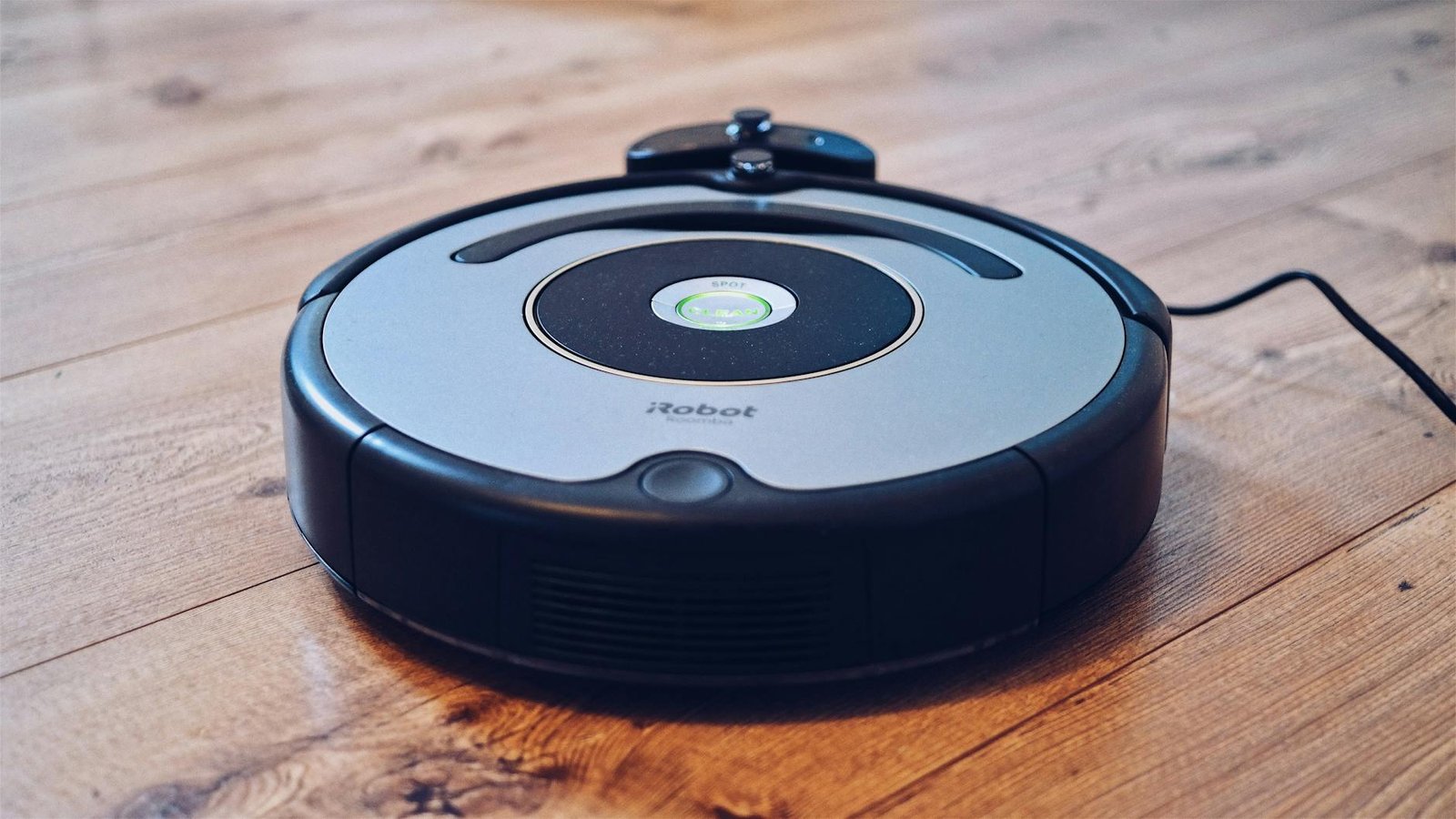
The Roomba Combo j9+ is iRobot’s flagship combo unit and the choice for anyone already embedded in the iRobot ecosystem or who prefers an official, well-maintained Home Assistant integration. Its defining feature is a retractable mop arm that physically lifts the mop pad up onto the top of the robot when it detects carpet — a mechanical solution that completely eliminates the risk of mopping carpet. The Clean Base dock handles auto-emptying with a sealed bag system that traps allergens effectively. iRobot does not publish Pa ratings, but real-world performance is strong on hard floors and low-pile carpet.
Specs: Retractable mop arm, vSLAM navigation, dual rubber rollers, Clean Base auto-empty dock with allergen-sealing bags, priced around $999.
Pros: Retractable mop is the most reliable carpet-protection system tested; official Home Assistant integration is stable and well-documented; allergen-sealing dust bags are excellent for allergy sufferers; most affordable option in this roundup.
Cons: Replacement dust bags add ongoing consumable cost; no mop pad washing in the dock — pads must be manually cleaned.
Best for: Mixed carpet and hard floor homes where avoiding any mop contact with carpet is non-negotiable, and for iRobot ecosystem users.
5. Narwal Freo X Ultra
The Narwal Freo X Ultra is the most mop-forward option in this group and the most affordable at around $899. Narwal built its reputation on mopping quality, and the Freo X Ultra continues that with a dual spinning mop system and a dock that washes, dries, and refills automatically. It delivers 8,200 Pa of suction, which is perfectly adequate for hard floors and low-pile carpet. The DirtSense technology adjusts mop pressure in real time based on detected floor soiling, which is a genuinely useful feature for kitchen floors that go from lightly dusty to genuinely sticky. Home Assistant integration is limited and cloud-dependent, which is its main weakness for this audience.
Specs: 8,200 Pa suction, dual spinning mop pads, DirtSense adaptive pressure, auto-empty and mop-washing dock, priced around $899.
Pros: Best mopping performance per dollar in this roundup; DirtSense adaptive pressure is effective on kitchen floors; most affordable fully-automatic option; dock is compact relative to competitors.
Cons: Cloud-dependent operation with limited local API access; weaker obstacle avoidance than Roborock or Dreame; less capable on carpet than suction-focused rivals.
Best for: Tile-heavy or hard floor homes where mopping quality is the top priority and Home Assistant integration is a secondary concern.
Best Overall Pick: Roborock S8 MaxV Ultra
After running all five of these units through the same home environment over several months, the Roborock S8 MaxV Ultra is the clear winner for the HomeNode audience. Here is exactly why it wins. First, the Home Assistant integration is the best of any robot vacuum on the market right now — it exposes room-level cleaning controls, consumable status, error states, and dock status as native entities, meaning you can build genuinely sophisticated automations without any workarounds. Second, the hot water mop washing at 60°C is a meaningful hygiene advantage over warm-water competitors, especially for kitchen floors. Third, the RGB camera obstacle avoidance is reliable enough to run overnight or while you are away from home without worrying about it getting stuck on a stray cable. What actually works in practice is a robot you can fully automate and forget about — and the S8 MaxV Ultra gets closer to that ideal than anything else in this price range. At $1,599, it is not cheap, but it is the unit that will integrate most deeply with your Home Assistant setup and require the least manual intervention over time.
Looking at Robot Vacuums — What’s the Best Across Key Criteria?
Suction Power and Cleaning Performance
The Dreame X30 Ultra wins on raw numbers at 12,000 Pa, followed by the Roborock at 10,000 Pa. For homes that are primarily hard floors, anything above 8,000 Pa is more than sufficient. For homes with medium to thick carpet, the Dreame’s extra suction is genuinely noticeable. The Roomba j9+ is the wildcard here — iRobot’s rubber roller system is highly efficient and performs above what its unrated Pa figure might suggest on hard floors.
Mopping Quality
The Narwal Freo X Ultra and Roborock S8 MaxV Ultra lead here. The Narwal’s DirtSense pressure adjustment makes it the most thorough mop on sticky kitchen floors. The Roborock’s hot water washing keeps mop pads cleaner between runs. The Roomba j9+’s retractable pad is the safest option for mixed-floor homes but requires manual pad washing.
Smart Home and Home Assistant Integration
Roborock leads by a significant margin with its official, locally-capable integration. iRobot’s official HA integration is stable and well-documented. Dreame requires a community integration. Ecovacs and Narwal trail the field here, with cloud-dependent implementations that offer less automation flexibility. For anyone building presence-based or schedule-based cleaning automations, this criterion alone may decide the purchase. See our IoT smart home device guide for more integration comparisons.
Auto-Empty and Dock Maintenance
All five units include automatic self-emptying. The Roborock, Dreame, Ecovacs, and Narwal all wash mop pads automatically in the dock. The Roomba j9+ does not wash pads in the dock, which is its main maintenance disadvantage. Bag-based systems like the Roomba offer better allergen containment; bagless systems like the Roborock require periodic filter cleaning.
Price and Value
The Narwal Freo X Ultra at ~$899 offers the best entry point into fully-automatic operation. The Roomba j9+ at ~$999 adds the retractable mop advantage. The Ecovacs X2 Omni at ~$1,299 brings the square-body corner cleaning edge. The Dreame X30 Ultra at ~$1,499 delivers the highest suction. The Roborock S8 MaxV Ultra at ~$1,599 commands a premium but justifies it with integration depth and hot water mopping.
Recommendations by Home Lab Use Case
For the Home Assistant power user: Roborock S8 MaxV Ultra — no contest on integration depth and local API access.
For heavy carpet and pet hair: Dreame X30 Ultra — 12,000 Pa suction handles the toughest debris loads.
For tile-heavy kitchens and bathrooms: Narwal Freo X Ultra — DirtSense mopping is the best value for hard floor households.
For mixed carpet and hard floor homes: iRobot Roomba Combo j9+ — the retractable mop is the most reliable carpet-protection mechanism available.
For open floor plans with lots of corners: Ecovacs Deebot X2 Omni — the square body design is a genuine advantage in right-angle rooms.
Frequently Asked Questions
What is the best robot vacuum with auto-empty and mop under $2000?
The Roborock S8 MaxV Ultra is the best overall for most users, with 10,000 Pa suction, hot water mop washing, and the deepest Home Assistant integration available. For budget-focused buyers, the Narwal Freo X Ultra at around $899 delivers full auto-empty and automatic mop washing at a significantly lower price point.
How do I integrate a robot vacuum with Home Assistant?
Roborock offers the most seamless path via the official HA integration, exposing room-level cleaning controls and consumable sensors as native entities. iRobot also has an official integration. Dreame requires a community-maintained HACS integration. Most of these allow presence-triggered cleaning, schedule automation, and error notifications through standard HA automations.
Do I need a robot vacuum that mops if I mostly have hard floors?
Yes, strongly recommended. Modern combo units wash their own mop pads automatically in the dock, making the mopping function nearly maintenance-free. A vacuum-only unit will leave hard floors looking clean but feeling sticky over time, particularly in kitchens.
What is the difference between bag and bagless auto-empty systems?
Bag systems like the Roomba j9+ seal debris in a disposable bag — better for allergy sufferers. Bagless systems like the Roborock S8 MaxV Ultra use a large bin you empty directly, eliminating bag costs but requiring more careful handling. Both work well; the decision comes down to allergy sensitivity and consumable cost tolerance.
Conclusion
Whether you are looking for a robot vacuum and asking what’s the best option for a fully automated home, or you are simply tired of manually emptying a dustbin every other day, the five units in this comparison represent the current best of what the self-emptying, self-mopping category has to offer in 2026. For the HomeNode audience specifically, the Roborock S8 MaxV Ultra earns the top spot because it treats your robot vacuum as a first-class smart home device rather than a standalone appliance. That said, the right answer for your home depends on your floor types, your automation stack, and your budget — and every unit on this list is a legitimate choice within its use case. Have you already integrated a robot vacuum into your Home Assistant setup? Drop a comment below with your configuration, share which unit you landed on, or ask a question about integrating robotic vacuums into your broader home automation stack — the HomeNode community would love to hear how you have set things up.
— Auburn AI editorial, Calgary AB