
AI-narrated version of this post using a synthetic voice. Great for accessibility or listening while busy.
A $30 USB dongle and a Raspberry Pi you might already have in a drawer can turn into a live radar screen showing every aircraft within roughly 150-250 miles, tail numbers and altitude included, updating in real time. That’s the pitch behind RTL-SDR – software-defined radio built on cheap TV-tuner hardware repurposed for something the original manufacturer never intended. Once it’s running, the same dongle that tracks flights overhead can also scan FM radio, pull in NOAA weather satellite images, listen to airband traffic, and decode a surprising range of radio signals most people assume needs expensive dedicated equipment.
We’ve covered plenty of Raspberry Pi builds on this site – see our Raspberry Pi projects roundup and the complete Pi home server setup guide – but software-defined radio hasn’t come up yet, which is an odd gap given how well it fits the same low-power, always-on, tinkerer-friendly niche the rest of the Pi ecosystem already occupies.
Who This Project Is Actually For
This is a genuinely approachable weekend project, not one requiring an amateur radio license or an electronics background – receiving is legal without any license in the US, only transmitting requires one. Buy in if you live somewhere with a reasonably clear view of the sky (a window, a balcony, an attic antenna run), you’ve got a spare Pi or are willing to buy a cheap one specifically for this, and you like the idea of a small always-on box quietly doing something interesting in the background. Set expectations lower if you’re in a basement apartment with no line of sight to open sky and no way to run an antenna cable anywhere better – ADS-B and most SDR use cases are line-of-sight radio, and a dongle stuck on a desk in a windowless room pulls in a fraction of the aircraft a properly placed antenna would.
What ADS-B Flight Tracking Actually Is
Since 2020, most aircraft in controlled airspace broadcast their position, altitude, speed, and identification over a public 1090MHz frequency as part of a mandate called ADS-B Out – a byproduct of modern air traffic control that happens to be trivially receivable by anyone with the right antenna and a computer that can decode it. An RTL-SDR dongle tuned to 1090MHz, paired with free decoding software, turns that broadcast into a live map, and the software then optionally feeds that data to public tracking sites like FlightAware or ADS-B Exchange in exchange for a free premium account on those services. This is legitimately one of the more satisfying home projects available at this price point: watching a small map fill in with real aircraft, updated every second, running entirely on hardware that cost less than a mid-range restaurant dinner.
Beyond Flight Tracking: What Else the Same Dongle Does
ADS-B is the gateway use case because it’s visually satisfying and requires almost no configuration, but the same RTL-SDR hardware tunes across a wide frequency range depending on the specific dongle’s chipset – typically somewhere from 500kHz up past 1.7GHz. That range covers FM broadcast radio, NOAA weather satellite passes, airband traffic from local air traffic control and pilots, and depending on your local laws, public service radio traffic. Each use case needs different software and sometimes a different antenna tuned to that range, so the ADS-B build described below is a starting point, not the ceiling on what the hardware can do.
Picking the Right Pi for This
A Raspberry Pi Zero 2 W is enough hardware to run dump1090 (the standard ADS-B decoder) continuously, and its low power draw makes it a sensible choice for something meant to run 24/7 in a window or attic. It struggles the moment you want to run a full aggregator stack feeding multiple tracking services simultaneously while maybe layering in a second SDR use case at the same time – at that point a Raspberry Pi 5 has enough headroom to run all of it without the occasional dropped-packet stutter a Zero 2 W shows under combined load. Buy the Zero 2 W if this is purely a dedicated single-purpose ADS-B feeder tucked in a window; buy the Pi 5 if you want one box handling flight tracking, weather satellite decoding, and general SDR experimentation without swapping SD cards between projects.
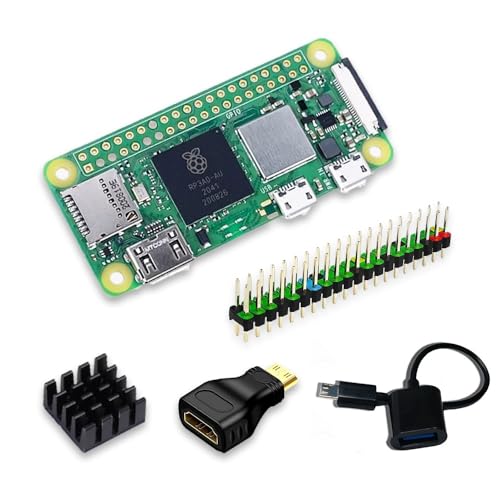
- Powerful Performance: Equipped with a quad-core 64-bit ARM Cortex-A53 processor, the Raspberry Pi Zero 2 W delivers a significa…
- SANOOV Basic Starter Kit for Pi Zero 2 W Include: 1. Raspberry Pi Zero 2 W Board 2.Mini HDMI to Standard HDMI adapter 3.Micro-U…
- SANOOV for Raspberry Pi Zero 2 W features: 1GHz quad-core, 64-bit ARM Cortex-A53 CPU VideoCore IV GPU 512MB LPDDR2 DRAM 802.11b…
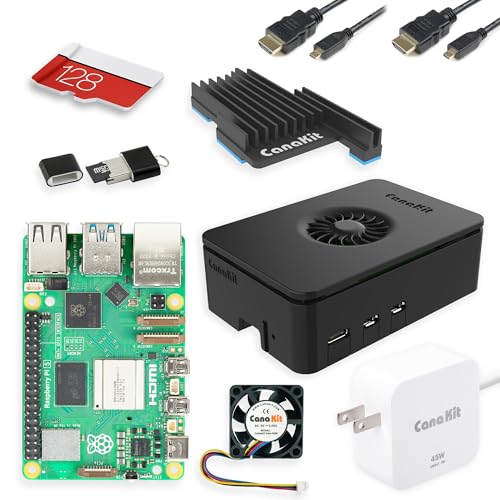
- Includes Raspberry Pi 5 with 2.4Ghz 64-bit quad-core CPU (8GB RAM)
- Includes 128GB Micro SD Card pre-loaded with 64-bit Raspberry Pi OS, USB MicroSD Card Reader
- CanaKit Turbine Black Case for the Raspberry Pi 5
The Dongle and Antenna: Where Not to Cut Corners
Generic RTL-SDR dongles bundled with random TV tuner kits work for basic testing, but they’re built around older, noisier tuner chips that measurably underperform on weak or distant signals. The RTL-SDR Blog V4 is the community-recommended baseline specifically because it uses a stable, well-supported tuner and a temperature-compensated oscillator that keeps frequency accuracy tight over long recording sessions – the difference matters more than it sounds on paper once you’re trying to pull in aircraft near the edge of your reception range.

- High-Performance RTL SDR Receiver with R828D Chip for Clear Signal Reception.
- Includes Multipurpose Antenna for Enhanced Signal Quality and Versatility.
- Compatible with Various Software for Diverse Applications in Signal Processing.
The antenna matters at least as much as the dongle, and this is the step people skip to their own detriment. The small antenna bundled with most dongle kits is a compromise for general-purpose testing across many frequencies; a dedicated 1090MHz-tuned antenna, mounted as high and as clear of obstructions as practical, meaningfully extends both range and the number of aircraft your setup actually decodes versus a generic stub antenna sitting on a desk.

- Complete ADS-B Antenna Pair: Dedicated 1090MHz and 978MHz antennas with SMA connectors and MCX Adaptors, optimized for UAT an…
- Universal SDR Compatibility: Fits all SMA or MCX-input SDRs (e.g., RTL-SDR). Bundled with 2 low-loss MCX-to-SMA adapters—…
- Enhanced Signal Performance: 5dBi gain and ultra-low VSWR (<1.3 at center, <1.5 overall) maximize range and reception clarity...
Software: dump1090 and the Aggregator Stack
The standard build runs dump1090-fa (the FlightAware fork, actively maintained and the current community default) to decode the raw 1090MHz signal into readable aircraft data, then optionally layers on feeder clients for FlightAware, ADS-B Exchange, and FlightRadar24. All of this is available as a pre-built image for the Pi (the PiAware image is the most beginner-friendly starting point) that handles most of the setup without touching a command line beyond flashing the SD card and connecting to Wi-Fi. Budget an evening for the initial setup and antenna placement experimentation – moving an antenna six inches or getting it above a roofline rather than below it can meaningfully change how many aircraft show up on the map.
Comparison: Build Options at a Glance
| Setup | Approx. Cost | Range (typical) | Best For |
|---|---|---|---|
| Zero 2 W + generic dongle + stock antenna | $70-90 | 50-100 miles | Cheapest possible entry point, testing the concept |
| Zero 2 W + RTL-SDR Blog V4 + dedicated 1090MHz antenna | $110-140 | 150-200 miles | The sensible default build for most people |
| Pi 5 + RTL-SDR Blog V4 + dedicated antenna + outdoor mount | $180-230 | 200-250+ miles | Multi-use SDR box also running weather/airband decoding |
| Pi 5 + two RTL-SDR dongles (ADS-B + general scanning) | $220-280 | 200-250+ miles on ADS-B | Running flight tracking and general radio scanning simultaneously |
Antenna Placement Is the Real Variable
Every dollar spent upgrading the dongle or Pi matters less than antenna placement, and this is worth internalizing before buying anything. A 1090MHz antenna in a window facing an open sky direction outperforms the same antenna on a desk in an interior room by a wide margin, because 1090MHz signals don’t meaningfully penetrate walls or roofing material. If an attic or outdoor mount is feasible, that’s worth doing even with a modest antenna before spending more on a premium one stuck indoors – line of sight to the sky is the single biggest lever on how many aircraft the setup actually receives, well ahead of any hardware upgrade below it.
Joining the Wider Tracking Community
Once a feeder is running, the natural next step is deciding which aggregator services to actually feed, and it’s worth running more than one – FlightAware, ADS-B Exchange, and FlightRadar24 each reward feeders with a free premium account on their own platform, and none of them require exclusivity, so a single Pi can quietly feed all three from the same antenna without extra hardware. ADS-B Exchange is worth calling out specifically because it’s the one major aggregator that doesn’t filter out government, military, or law enforcement aircraft the way some others do, which makes it the go-to source for the flight-tracking hobbyist community and a genuinely different dataset than the mainstream flight-tracking apps most people already have on their phone. Beyond feeding data outward, local tools like tar1090 give you a clean, self-hosted map of your own reception running entirely on the Pi itself, viewable from any browser on your home network without depending on any external aggregator’s website being up.
Expanding Into Weather Satellites Later
Once the ADS-B build is running reliably, decoding NOAA polar-orbiting weather satellites as they pass overhead is a natural next project on the same hardware, using free software like SatDump or WXtoImg alongside a satellite pass-prediction tool to know exactly when and where to point during a usable pass. It needs a different antenna tuned for the roughly 137MHz band those satellites broadcast on rather than the 1090MHz antenna used for ADS-B, so budget for a second antenna specifically for this if it’s a direction you want to take the same dongle. The image quality achievable from a handful of dollars in hardware, pointed at a satellite passing hundreds of miles overhead, is a genuinely surprising result the first time it works.
The Practical Recommendation
Start with a Raspberry Pi Zero 2 W, an RTL-SDR Blog V4 dongle, and a dedicated 1090MHz antenna mounted as close to a clear sky view as your situation allows – that combination covers the ADS-B flight-tracking use case well for a genuinely modest cost and teaches you the basics of SDR software before you decide whether to expand into weather satellites or radio scanning. If you already know you want to run multiple SDR use cases at once, or you want headroom to add a second dongle later without a hardware bottleneck, spend the extra money upfront on a Pi 5 rather than upgrading later. Either way, put more planning effort into antenna placement than into which specific dongle model to buy – it’s the variable that actually determines whether this project feels impressive or disappointing once it’s running.
Affiliate disclosure: As an Amazon Associate, HomeNode earns from qualifying purchases at no additional cost to you. Product availability subject to change.
Related Auburn AI Products
Building a homelab or self-hosting content site? Auburn AI has practical kits: