AI-narrated version of this post using a synthetic voice. Great for accessibility or listening while busy.
Affiliate disclosure: As an Amazon Associate, HomeNode earns from qualifying purchases at no additional cost to you. Product availability subject to change.
Raspberry Pi’s official camera modules cover a surprisingly wide range of genuine use cases, from basic security monitoring to serious photography projects — picking the right one matters more than most people expect.
Not sure which board to get? The Raspberry Pi buyer’s guide compares the Pi 5, Pi 500+, Zero 2 W and Compute Module 5.
| Best For | Pick | Why | |
|---|---|---|---|
| Camera Module 3: the versatile general-purpose pick | Arducam for Raspberry Pi Camera Module 3, 12MP IMX708 75°(D) Autofocus Pi Camera V3, 15-22pin FFC Cable | Arducam for Raspberry Pi camera v3 is compatible with Raspberry Pi 5/4B/3B, Pi Zero W/2 W. | View → |
| HQ Camera: for genuinely serious image quality | Arducam for Raspberry Pi HQ Camera Module,12.3MP IMX477 Raspberry Pi Camera for Raspberry Pi5/4B/3B+/Zero 2W, Comes with C-CS Adapter and Tripod Mount | How to use: Before using this hq camera, please modify the config.txt file by adding dtoverlay=IMX477 (If connect to… | View → |
| NoIR Camera: for night vision and security projects | Raspberry Pi NoIR Camera Module V2 – 8MP 1080P30 | 8 megapixel camera capable of taking infrared photographs of 3280 x 2464 pixels | View → |
Camera Module 3: the versatile general-purpose pick
Camera Module 3 covers most general projects well with autofocus and solid image quality, the sensible default unless a specific project has more specialized needs.

- Arducam for Raspberry Pi camera v3 is compatible with Raspberry Pi 5/4B/3B, Pi Zero W/2 W.
- Based on IMX708 sensor with HDR, 4608 x 2592 is the highest resolution you can get for still images.
- The autofocus of pi cam v3 is achieved by a mixture of PDAF and CDAF, ensuring crisp and clear images.
HQ Camera: for genuinely serious image quality
The HQ Camera supports interchangeable C/CS-mount lenses and a larger sensor, worth the extra cost and complexity for projects where image quality is the actual point rather than a side feature.
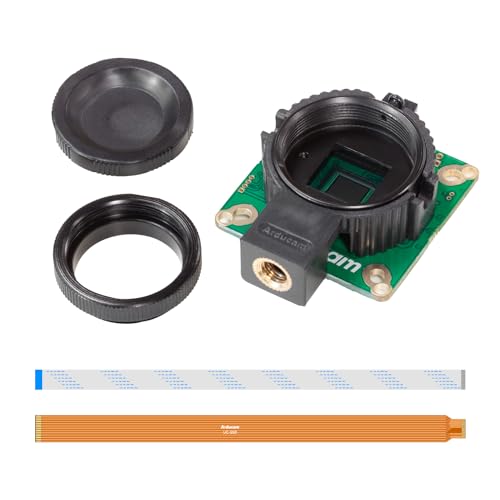
- How to use: Before using this hq camera, please modify the config.txt file by adding dtoverlay=IMX477 (If connect to cam0 port…
- For all Raspberry Pi: This Arducam for Raspberry Pi camera is compatible with all Raspberry Pi;
- What you will get: 1 x Pi hq camera(with a 1/4″ tripod adapter), 1 x dust cover, 1 x C-CS adapter, 1 x 15-22pin Pi camera cable…
NoIR Camera: for night vision and security projects
The NoIR variant removes the infrared filter standard cameras use, making it the right choice specifically for night-vision security camera projects paired with IR illumination.

- 8 megapixel camera capable of taking infrared photographs of 3280 x 2464 pixels
- Capture video at 1080p30, 720p60 and 640x480p90 resolutions
- All software is supported within the latest version of Raspbian Operating System
Match the camera to the project’s actual requirements rather than defaulting to the cheapest option — the difference between these modules matters a lot more once you’re past a basic proof-of-concept.