AI-narrated version of this post using a synthetic voice. Great for accessibility or listening while busy.
Affiliate disclosure: As an Amazon Associate, HomeNode earns from qualifying purchases at no additional cost to you. Product availability subject to change.
Most robot vacuums, even ones listed as “Home Assistant compatible,” still run what’s really a hybrid model – local communication handles routine commands and status polling, but the cloud is still required for initial setup and often falls back into the loop for anything beyond basic start/stop control. Genuinely local, cloud-independent robot vacuum control has been a niche hobbyist pursuit for years through projects like Valetudo. What’s changed over the last year is that this is no longer purely a hack – both new open-source integration work and at least one vacuum brand built specifically around local-first control have made real local API integration a legitimate buying consideration, not just an enthusiast workaround.
Who Should Care About Local API Support
If your priority is simply a good vacuum and you don’t run Home Assistant or a home server, none of this matters – buy based on suction, mapping quality, and app usability like any other robot vacuum purchase. This guide is for the home lab crowd specifically: if you want your vacuum’s status, room-cleaning triggers, and automations to work inside Home Assistant without depending on the manufacturer’s cloud staying online, or if you’re specifically uncomfortable with a device that maps your home’s floor plan sending that data to a manufacturer’s servers by default, the models and approaches below are worth the extra research before buying.
What “Local API Support” Actually Means, Tier by Tier
Not all “local integration” claims mean the same thing, and the difference matters. At the weakest tier, a vacuum’s Home Assistant integration uses local network calls for routine polling but still requires the cloud for initial pairing and periodically falls back to it – most Roborock and Ecovacs models sit here. A stronger tier is genuine local control with no cloud dependency after setup, which is what Valetudo (custom firmware flashed onto a supported vacuum, replacing the manufacturer’s cloud connection with a local web interface and MQTT) has offered for years on specific supported models. The newest development is vacuums and integrations built local-first from the start, rather than requiring firmware replacement to get there.
Comparison: The Current Local-Control Landscape
| Option | Local Control Level | Setup Complexity | Cloud Dependency | Price Tier |
|---|---|---|---|---|
| Matic Robot Vacuum | Built local-first by design | Low (no flashing required) | None by design | Premium |
| Narwal Flow (with community HA integration) | Fully local via dedicated integration | Moderate (custom integration install) | None once configured | High-end |
| Roborock (Valetudo-compatible models) | Fully local after flashing | High (firmware replacement required) | None after flashing | Mid-range (varies by model) |
| Roborock (stock firmware + official HA integration) | Hybrid – local polling, cloud for setup/fallback | Low | Partial | Mid-range |
| Dreame/Mova (community integrations) | Varies by model, improving | Moderate to high | Partial to none, model-dependent | Mid-range to high-end |
The Picks
Matic Robot Vacuum is the most direct answer to the local-control question available right now – it’s built and marketed specifically around local-first, privacy-focused operation rather than needing firmware replacement to get there, which makes it the simplest buy for someone who wants this out of the box without a DIY project attached.
Narwal Flow stands out because of a specific community-built Home Assistant integration (available for HA 2026.3 and later) that offers genuinely local, no-cloud operation including room-specific cleaning, work mode control, and consumable sensor tracking – a level of local integration depth that’s still uncommon for a mainstream vacuum brand.

- Self-Cleaning Mop with FlowWash — Always Cleans with Fresh Water. Tired of robot mops spreading dirty water? This robot vacuum…
- 31,000Pa Suction for Pet Hair + Dual Tangle-Free Brush System. This robot vacuum for pet hair delivers 31,000Pa suction power t…
- AI Object Recognition with Dual Cameras — Avoids Obstacles, Cleans Smarter. Powered by dual cameras and an advanced VLM AI brai…
A Valetudo-compatible Roborock model (check the Valetudo project’s current supported-device list before buying, since compatibility is tied to specific hardware revisions) remains the deepest local-control option available, at the cost of voiding the manufacturer’s cloud app entirely and replacing it with Valetudo’s own local web interface – not a project for someone who wants a simple out-of-box experience.

- ðð¹ð¹-ð¶ð»-ð¢ð»ð² ðð¼ð°ð¸ ð³ð¼ð¿ ðð®ð»ð±ð-ðð¿ð²ð² ðð¹ð²ð®ð»ð¶…
- ðð´,ð±ð¬ð¬ ð£ð® ð£ð¼ðð²ð¿ð³ðð¹ ð¦ðð°ðð¶ð¼ð» – Engineered for strong everyday c…
- ðð»ðð¶-ð§ð®ð»ð´ð¹ð² ð¦ðððð²ðº ð³ð¼ð¿ ð£ð²ð ðð¼ðºð²ð – Built for h…
Roborock on stock firmware with the official Home Assistant integration is the realistic middle ground for most buyers – genuine local polling and command handling for day-to-day use, while accepting that initial setup and occasional fallback still depend on Roborock’s cloud, a compromise that’s honestly fine for most households.
Dreame and Mova models with community integrations round out the list as the most variable option – open-source integration work for these brands has improved meaningfully, including newer unofficial local-only support for some models, but coverage and reliability differ significantly by exact model, so check the specific integration’s current status before buying rather than assuming brand-wide support.
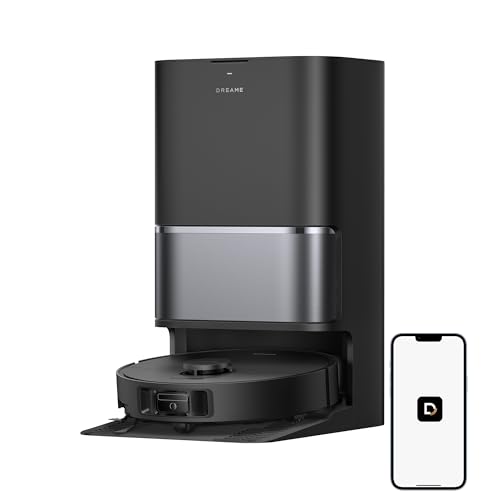
- High-Powered 25,000Pa Suction Performance: Powerfully clean hard floors and carpets with 25,000Pa suction and 5 suction levels…
- Tackle Corner Messes with Ease: L40 Ultra Gen 2 extends its brush and mop to reach corners and under furniture, delivering a de…
- Less Manual Maintenance: All-in-one self-cleaning dock streamlines the autonomous cleaning experience. 4 tailored modes let you…
Setup Complexity Is a Real Cost, Not a Footnote
Be honest with yourself about how much tinkering you actually want to do. Flashing Valetudo onto a supported Roborock model genuinely delivers the deepest local control on this list, but it means voiding the manufacturer’s own app and warranty implications in the process, following a technical flashing procedure, and troubleshooting entirely within a community project rather than official support channels. The Matic vacuum sits at the opposite end – local-first by design with no flashing required – specifically because it’s priced and built to make that trade-off unnecessary. Match your choice to how much setup effort you’re actually willing to put in, not just which option offers the most theoretical local-control depth on paper.
Mapping Data Is the Privacy Concern Driving This Category
The reason local control matters enough to shop around for is usually specific: a robot vacuum with mapping capability builds a detailed floor plan of your home’s interior, room by room, and a cloud-dependent vacuum sends that map to the manufacturer’s servers as a normal part of how the cloud-connected app works. For most people this is a non-issue. For anyone who’s specifically uncomfortable with a detailed floor plan of their home living on a third-party server indefinitely, that’s the actual concern local-first control addresses – not vacuum performance itself, which doesn’t meaningfully differ between local and cloud-connected models running the same underlying hardware.
This Category Is Still Moving Fast
Local API support for robot vacuums is a genuinely active area of development right now, with new community integrations and firmware support appearing on a rolling basis rather than settling into a stable, finished feature set. Before buying specifically for local control, check the current status of whichever integration you’re relying on – the Home Assistant community forums and the relevant GitHub projects (Valetudo, the Narwal Flow integration, and similar community efforts) are more current than any static buying guide, this one included, since compatibility and feature coverage genuinely shift month to month in this space.
Multi-Floor and Multi-Map Support Is a Separate Question From Local Control
If your home has more than one level, check a specific model’s multi-map support separately from its local-control credentials, since the two features aren’t related and it’s easy to assume a vacuum that handles one well handles the other. Most current-generation vacuums, including all five options above, support saving and switching between multiple floor maps, but the actual experience of doing so – how many maps, how the switch is triggered, whether it requires manual intervention or detects the correct floor automatically – varies enough between models to matter for a genuinely multi-level home. This is a good example of a spec worth checking directly on the current model page rather than assuming from the brand’s general reputation, since it changes between generations even within the same product line.
Consumables and Maintenance Costs Don’t Change With Local Control
It’s worth remembering that choosing a vacuum for its local-control credentials doesn’t change the ongoing physical maintenance every robot vacuum in this category needs regardless of how it’s controlled – brush rolls, filters, and mop pads all wear out and need periodic replacement, and self-emptying dock consumables (dust bags, cleaning solution for models with mop-washing docks) are a real recurring cost worth factoring into the total price of ownership. None of the local-API considerations above change this maintenance reality, and it’s easy to focus entirely on the software question while underestimating the ongoing physical upkeep cost across a vacuum’s several-year lifespan.
What Happens If a Community Integration Stops Being Maintained
This is worth thinking through honestly before betting heavily on a community-built integration like the Narwal Flow project or a Valetudo-supported model. Open-source projects maintained by volunteers can slow down or stop receiving updates if the maintainer’s interest or available time changes, which is a real risk not present with an official, company-backed integration. This doesn’t mean avoiding community integrations – they’re often the only path to genuine local control at all – but it’s worth checking a project’s recent commit activity and community size before relying on it heavily, and having a fallback plan (the vacuum’s stock app still working even if the local integration stops receiving updates) rather than assuming community support will exist indefinitely.
Voice Assistant Integration Works Differently From Home Assistant Integration
It’s worth keeping these two things separate when researching a specific model, since marketing copy often blurs them together. “Works with Alexa” or “works with Google Assistant” typically means basic voice commands (start, stop, dock) routed through the manufacturer’s cloud, which is a meaningfully shallower integration than a dedicated Home Assistant integration offering room-level control, detailed status sensors, and automation triggers. A vacuum can advertise broad voice assistant compatibility while still being a poor fit for the kind of local, detailed Home Assistant integration this guide is actually about – check specifically for a Home Assistant integration (official or community-built) rather than assuming general smart home compatibility covers the same ground.
The Practical Recommendation
If local-first control matters enough to be a primary buying factor and you don’t want a DIY project, the Matic Robot Vacuum is the cleanest answer available today – built for this from the ground up rather than retrofitted onto it. If you’re comfortable with a bit more setup effort for meaningfully deeper Home Assistant integration, the Narwal Flow’s community integration is worth the install time. Reserve the Valetudo-flashing route for someone who genuinely wants maximum control and doesn’t mind losing manufacturer app support entirely, and if none of this feels worth the effort, stock Roborock with the official Home Assistant integration remains a perfectly reasonable middle ground that most households will never notice the limitations of.