AI-narrated version of this post using a synthetic voice. Great for accessibility or listening while busy.
Affiliate disclosure: As an Amazon Associate, HomeNode earns from qualifying purchases at no additional cost to you. Product availability subject to change.
RAID level choice gets treated as a technical afterthought by a lot of first-time NAS buyers, right up until a drive fails and they discover their setup either can’t survive it or wastes half their storage capacity doing so. Here’s how to actually pick.
Mirror (RAID 1) makes sense for two bays and nothing more
With exactly two drives, a mirror is the only real option — every byte is duplicated across both disks, so you get 50% usable capacity but can survive one drive failing completely. It’s simple and fast to rebuild, but it doesn’t scale past two drives in any meaningful way.
RAID 5 and Synology’s SHR balance capacity and protection for 3-5 bays
RAID 5 spreads parity data across all drives, tolerating one drive failure while using only the equivalent of one drive’s capacity for redundancy rather than half of everything. Synology’s SHR does the same job with more flexibility for mixed drive sizes, which matters if you’re not buying all your drives on day one.

- Available in capacities ranging from 2TB to 12TB
- For RAID-optimized NAS systems with up to 8 bays
- Designed for Continuous Operation
RAID 6 costs you two drives’ worth of capacity but survives two failures
Once you’re running 6TB+ drives, rebuild times after a failure can stretch past 24 hours, and a second drive failing during that rebuild window is a real risk with larger, older drives. RAID 6 tolerates two simultaneous failures at the cost of a second drive’s capacity — worth it on 4-bay-plus systems using large drives, less necessary on smaller arrays with newer disks.
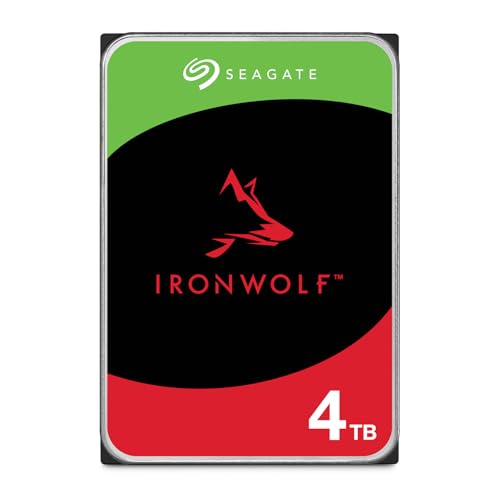
- IronWolf internal hard drives are the ideal solution for up to 8-bay, multi-user NAS environments craving powerhouse performance
- Store more and work faster with a NAS-optimized hard drive providing ultra-high capacity up to 16TB and cache of up to 256MB
- Purpose built for NAS enclosures, IronWolf delivers less wear and tear, little to no noise/vibration, no lags or down time, inc…
RAID is not a backup, regardless of which level you pick
Every RAID level protects against drive failure. None of them protect against accidental deletion, ransomware, a house fire, or a controller failure that corrupts the whole array at once. If your NAS is your only copy of irreplaceable photos, RAID 6 with no offsite backup is still one bad event away from total loss.
The practical recommendation
Two bays: mirror, no real alternative. Three to five bays holding drives under 6TB: SHR or RAID 5. Four-plus bays with large drives: RAID 6 is worth the capacity trade-off for the rebuild-window protection. Whatever you choose, budget for an actual offsite or cloud backup of anything you can’t afford to lose — the RAID level only decides how much hardware failure your storage survives, not how much human error it survives.