
See also: Time Machine to a NAS: Backing Up Macs to Synology, UGREEN or TrueNAS (2026).
AI-narrated version of this post using a synthetic voice. Great for accessibility or listening while busy.
Affiliate disclosure: As an Amazon Associate, HomeNode earns from qualifying purchases at no additional cost to you. Product availability subject to change.
Our external NVMe enclosure guides cover the DIY route – buying a bare drive and an enclosure separately, for anyone who wants to reuse an existing NVMe drive or build exactly the speed/capacity combination they want. Most people shopping for portable storage don’t want a DIY project. They want to buy a finished drive, plug it in, and have it work, and that prebuilt portable SSD category has its own set of genuine best-sellers worth knowing about separately from the enclosure route.
Who This Guide Is For
Buy a prebuilt portable SSD if you want external storage that works immediately with no assembly, need a drive with a known, tested thermal and durability profile as a single unit, or want a manufacturer warranty that covers the whole drive rather than juggling separate warranties on a bare NVMe stick and an enclosure. If you already own a spare NVMe drive and specifically want to control the exact enclosure and connection type, the DIY enclosure route linked above will usually save money and offer more customization.
Comparison: What’s Actually Selling
| Drive | Interface | Sustained Speed | Standout Trait | Price Tier (2TB) |
|---|---|---|---|---|
| Samsung T9 | USB 3.2 Gen 2×2 | Up to 2,000 MB/s | Widely recommended as the best overall portable SSD in current buying guides | High-end |
| SanDisk Extreme Portable SSD | USB 3.2 Gen 2 | Up to 1,050 MB/s | Frequently cited as the top-selling drive in the category on Amazon | Mid-range |
| Crucial X9 Pro | USB 3.2 Gen 2 | Up to 1,050 MB/s | Best value pick in most 2026 comparisons | Budget |
| SanDisk Professional PRO-G40 | Thunderbolt 3 | Up to 2,800 MB/s | Rugged, professional-grade build and top-tier speed | Premium |
| Samsung T7 Shield | USB 3.2 Gen 2 | Up to 1,050 MB/s | IP65 rated, drop-resistant rubberized housing | Mid-range |
The Picks
Samsung T9 shows up as the top overall recommendation across current buying guides for good reason – sustained 2,000 MB/s read and write speeds over USB 3.2 Gen 2×2, a 3-year warranty, and broad compatibility across Windows, Mac, Android, and PlayStation 5, which covers nearly every use case a portable drive buyer actually has.
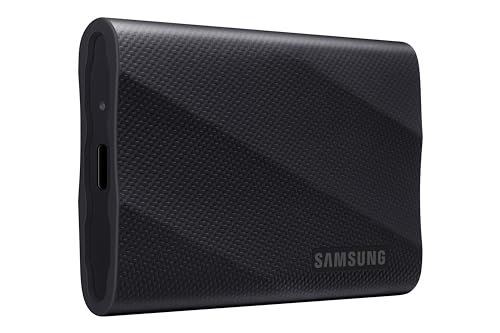
- NONSTOP SPEED: Race through projects with our fastest SSD for creators; Load, edit and transfer with sustained read and write s…
- DYNAMIC THERMAL GUARD: When you’re elbow-deep in a passion project, the T9 Portable SSD stays cool; Its advanced thermal soluti…
- ADAPTS TO EVERY NEED: Whether you’re using a desktop, camera or a gaming console3, count on the T9 Portable SSD for extensive c…
SanDisk Extreme Portable SSD is frequently identified as the single top-selling drive in this category on Amazon specifically, and the reason is straightforward – solid, dependable speed at a price that consistently undercuts Samsung’s flagship without a meaningful gap in everyday usability.
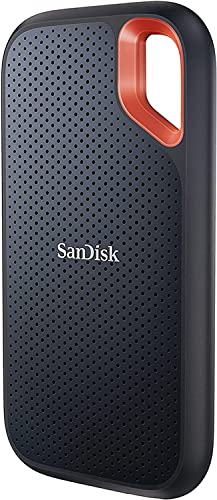
- Get NVMe solid state performance with up to 1050MB/s read and 1000MB/s write speeds in a portable, high-capacity drive(1) (Base…
- Up to 3-meter drop protection and IP65 water and dust resistance mean this tough drive can take a beating(3) (Previously rated…
- Use the handy carabiner loop to secure it to your belt loop or backpack for extra peace of mind.
Crucial X9 Pro is the clear budget-conscious pick when 2,000 MB/s speeds aren’t necessary – reliable performance for everyday backup and file transfer tasks at a price point that undercuts both Samsung and SanDisk’s flagship drives.
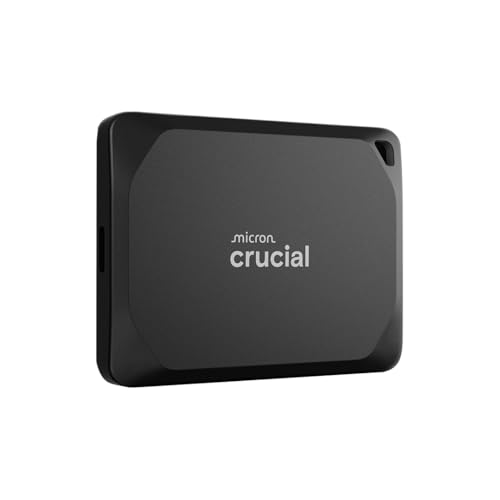
- Ultra-fast Speeds: Designed for professional creators, this external SSD delivers fast data access with up to 2,100MB/s read an…
- Built to Last: Perfect for field work and all-weather shoots with IP55 water and dust resistance. Plus, drop resistant up to 7….
- Broad Compatibility: External drive connects effortlessly with Windows, Mac, iPad Pro, Chromebooks, Android, Linux, PS4, PS5, a…
SanDisk Professional PRO-G40 is built for a different buyer entirely – video editors and other professionals moving large files who need Thunderbolt 3’s higher ceiling and a genuinely rugged build that can survive life in a camera bag or field kit, not just a desk drawer.
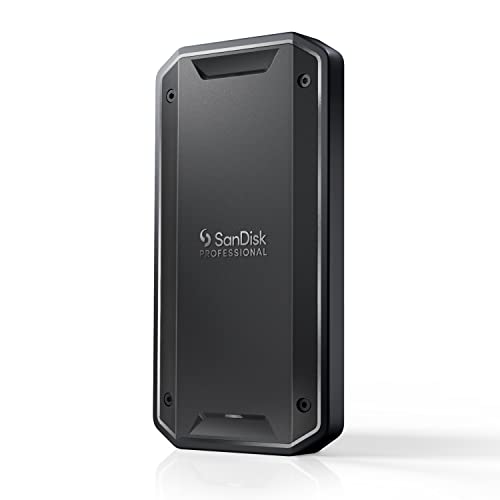
- Super-fast speeds up to 3000MB/s(1) read and 2500MB/s(1) write with Thunderbolt 3 (40Gbps), capable of moving 50GB in 1 minute…
- Dual-mode compatibility with both Thunderbolt 3 (40Gbps) and USB-C (10Gbps)
- Ultra-rugged design with high-level IP68 dust/water resistance, 4000lb crush resistance, and 3m drop resistance (On a carpeted…
Samsung T7 Shield is the pick when durability matters more than raw speed – an IP65 rating and a rubberized housing built to survive drops, at a modest speed step-down from the T9 that most non-professional use cases won’t notice.
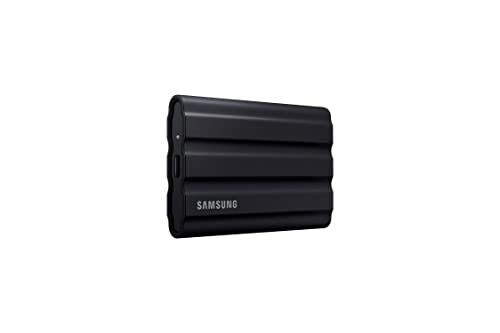
- GO THE DISTANCE: Withstand whatever adventure with the wildly reliable T7 Shield; It’s designed for the elements with water1, d…
- YOUR CONTENT CAPTURED: Take on the project, then transfer all your heavy files within seconds with the USB 3.2 Gen 2 Portable S…
- SHARE IDEAS IN A FLASH: The T7 is embedded with PCIe NVME technology that brings you fast read and write speeds up to 1,050/1,0…
USB 3.2 Gen 2×2 vs. Gen 2: The Spec That Actually Matters Here
The single most important spec differentiator among these drives isn’t capacity – it’s which exact USB standard the drive uses, since the naming is genuinely confusing and directly determines real-world speed. USB 3.2 Gen 2 tops out around 1,050 MB/s in practice, while USB 3.2 Gen 2×2 (which the Samsung T9 uses) roughly doubles that ceiling to around 2,000 MB/s – but only if the computer’s port and cable both support Gen 2×2 as well. Plugging a Gen 2×2 drive into an older Gen 2 or Gen 1 port simply caps it at the port’s lower speed, so check your actual laptop or desktop’s USB port specification before paying extra for a Gen 2×2 drive if your hardware can’t take advantage of it.
Do You Actually Need Thunderbolt Speeds?
The SanDisk Professional PRO-G40’s Thunderbolt 3 interface pushes considerably past what USB drives on this list offer, but that ceiling only matters for specific workloads – editing high-bitrate 4K or 8K video directly off the external drive, moving very large project files repeatedly, or running demanding applications from external storage. For everyday file backup, photo library storage, or general document transfer, a USB 3.2 Gen 2 or Gen 2×2 drive already exceeds what those tasks actually need, and paying the Thunderbolt premium buys speed most buyers won’t use.
Portable SSD vs. Portable Hard Drive: Worth Confirming Before Buying
It’s worth double-checking that a specific listing is actually a solid-state drive and not a traditional spinning hard drive marketed under a similar-sounding product line, since some manufacturers sell both under overlapping branding. SSDs cost more per terabyte but offer dramatically faster speeds, no moving parts to fail from drops or vibration, and silent operation – all genuine advantages for a drive that’s going to get thrown in a bag and carried around, which is the entire point of buying “portable” storage in the first place.
Durability Claims Deserve a Closer Look
IP ratings (like the Samsung T7 Shield’s IP65) and “rugged” marketing language show up across this category, but they mean specific, different things worth understanding rather than treating as interchangeable buzzwords. An IP65 rating specifically means protection against dust and low-pressure water jets, not full submersion – that’s a different (higher) IP68 rating not present on the drives above. If the actual use case is professional field work in genuinely harsh conditions, look specifically at the IP rating number and drop-height certification (often listed separately in meters) rather than trusting “rugged” as a marketing word alone.
Cable Quality Determines Whether You Actually Get the Advertised Speed
The cable included in the box, and any replacement cable used later, has a real effect on whether a drive hits its advertised speed – a cheap or damaged USB-C cable rated for lower data speeds will silently cap throughput well below what the drive itself is capable of, with no error message telling you why transfers feel slower than expected. This matters most for the higher-speed drives in this comparison (the Samsung T9’s Gen 2×2 ceiling and the SanDisk Professional’s Thunderbolt 3 interface both need a cable rated to match), and it’s a common, easy-to-miss reason a drive underperforms its spec sheet after the original cable is lost or swapped for a generic replacement. Keep the original cable, or replace it specifically with one rated for the same speed class, rather than grabbing whatever USB-C cable happens to be nearby.
Hardware Encryption Is Worth Checking, Not Assuming
Most portable SSDs in this comparison support some form of password protection or hardware encryption through their companion software, but the strength and default state of that protection varies more than the marketing copy suggests. Samsung’s Magician software and SanDisk’s equivalent both support AES 256-bit encryption, but it typically has to be manually enabled rather than being on by default out of the box – a drive sitting in a bag with sensitive files on it offers no protection at all if that setting was never turned on. If the drive is going to carry anything sensitive, spend the five minutes during initial setup to enable encryption rather than assuming a security feature buried in a spec sheet is automatically protecting you.
Warranty Length Says Something Real About Expected Durability
Warranty terms across this comparison range from three to five years depending on model and brand, and it’s a genuinely useful signal beyond just the peace of mind it provides directly – manufacturers set warranty length based on real internal reliability data for the specific NAND flash and controller combination in a given drive, not as an arbitrary marketing number. A drive backed by a longer warranty is generally a reasonable proxy for a manufacturer’s own confidence in the hardware’s longevity, though it’s worth registering the drive with the manufacturer after purchase, since some warranty claims require proof of purchase and registration that’s easy to forget about until the moment you actually need it years later.
Formatting for Cross-Platform Use Is a Five-Minute Step Worth Not Skipping
Most portable SSDs in this comparison ship pre-formatted for one platform (commonly exFAT or a Windows-friendly format), which works fine on both Windows and Mac out of the box for basic file transfer, but it’s worth understanding the format’s actual limitations before assuming full compatibility. exFAT, the common cross-platform choice, lacks the permissions and journaling features of platform-native formats like APFS or NTFS, which rarely matters for simple file storage but can matter for specific use cases like running applications directly from the drive or using it as a Time Machine backup target on a Mac, which requires reformatting to APFS specifically. Check what the actual use case needs before assuming the out-of-box format is the right one to keep.
The Practical Recommendation
For most people who just want the best all-around portable SSD without overthinking it, the Samsung T9 remains the safe default, and it’s not a coincidence that it keeps showing up as the top overall pick across current buying guides. If budget is the deciding factor, the Crucial X9 Pro delivers real-world performance close enough to the flagships that most buyers won’t notice the difference in daily use. Choose the SanDisk Professional PRO-G40 only if your workflow genuinely needs Thunderbolt-class speeds, and reach for the Samsung T7 Shield specifically if the drive is going to live in a bag that gets dropped, rained on, or knocked around more than a typical desk setup.